
The eCommerce AI Chatbot: Driving Conversion and Retention at Scale
Legacy digital strategies attempted to solve this with static FAQs and frustrating "decision-tree" chatbots that forced customers into endless loops. Today, the definitive ai chatbot solution for ecommerce looks fundamentally different. It operates as an autonomous digital sales associate, capable of negotiating, upselling, cross-selling, and handling Tier-1 support instantly.
In this deep dive, we explore how leading brands utilize AI to drive personalized shopping at scale, provide real-time autonomous support, virtually eliminate passive cart abandonment, and ultimately maximize their Gross Merchandise Value (GMV).
1. Personalized Shopping at Scale: The Digital Associate
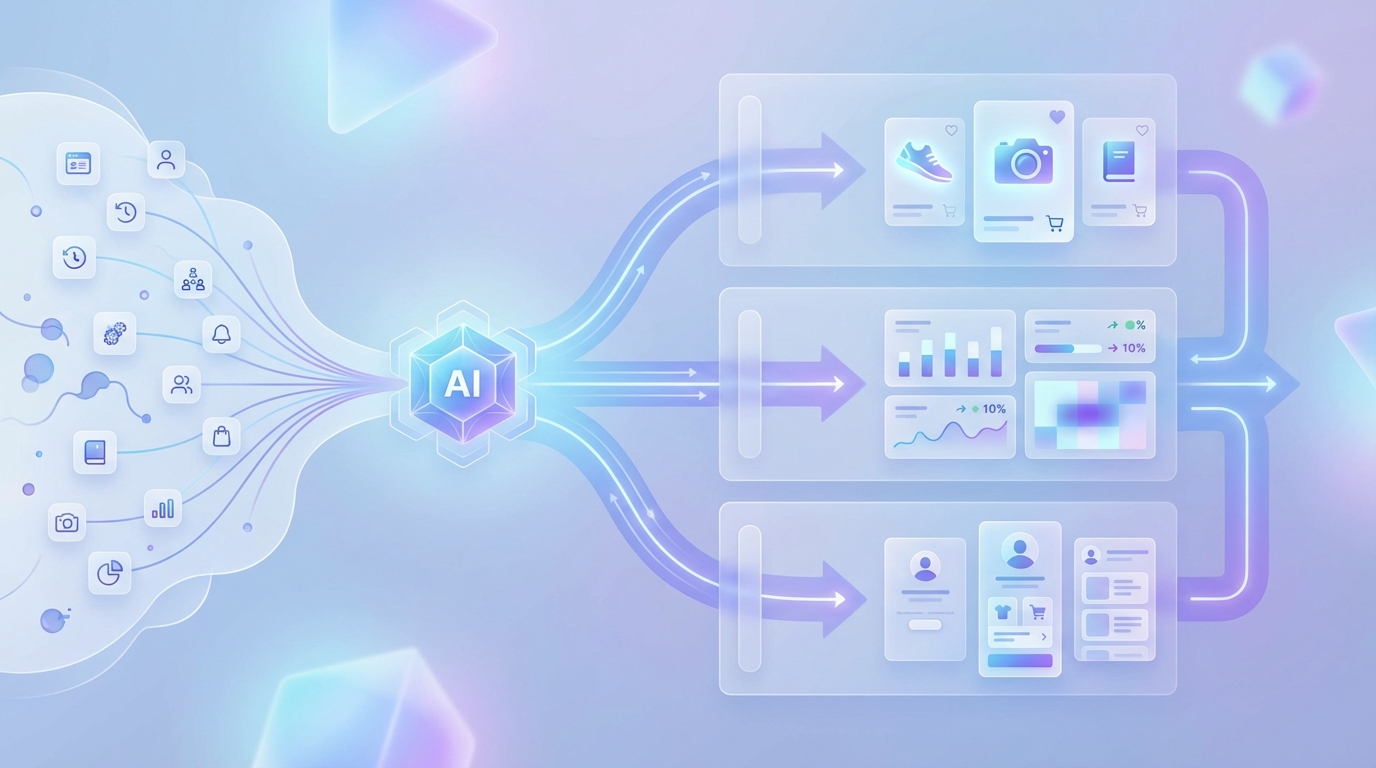 Personalization Engine
If you walk into a luxury retail boutique, an associate greets you. They ask about your preferences, assess your style, and bring you highly curated recommendations. The historic problem with eCommerce was the sheer inability to replicate this high-touch personalization for thousands of concurrent users.
An enterprise-grade ai chatbot platform for ecommerce solves this scale problem flawlessly.
Beyond Basic "Recommended Products"
Pre-2024 personalization engines relied on collaborative filtering ("Users who bought X also bought Y"). It was static and often irrelevant. A modern ecommerce ai chatbot engages in dynamic, multi-turn conversations to curate a shopping experience.
Example Interaction: Shopper: "I need a waterproof jacket for hiking in the Pacific Northwest this October. Something breathable." AI Associate: "October in the PNW means heavy rain but mild temperatures. I recommend our Summit Gore-Tex Shell. It’s highly breathable and currently in stock in your size (Medium) based on your past orders. Would you prefer the Forest Green or the Matte Black?"
The AI does not just link to a category page. It acts on the user's explicit semantic intent, checks live warehouse inventory via API, references the user's historical purchase data (sizing), and pushes for the micro-conversion.
This level of active curation fundamentally mimics a human sales process. The AI assistant can process the entire catalog, regardless of how vast, and surface the exact SKU the buyer needs in seconds. For insights into how AI operates in other highly-personalized sectors, review our analysis on the Real Estate AI Assistant.
2. Real-Time Order Tracking and Autonomous Support
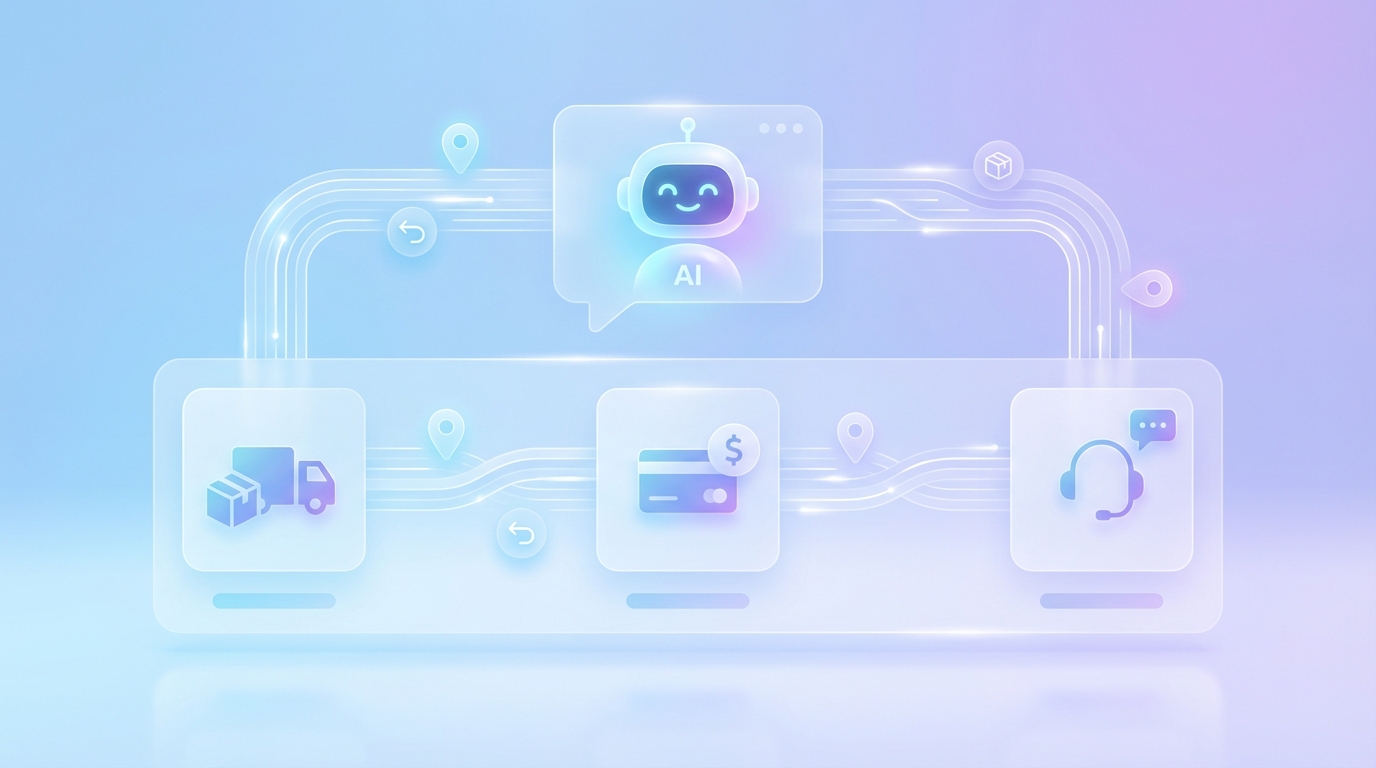 Autonomous Order and Support System
The vast majority of eCommerce customer support inquiries fall into two categories: "Where is my order?" (WISMO) and "How do I return this?"
If you force your buyers to wait 24 hours for a human agent to reply to an email with a tracking link, your brand equity suffers permanently. Modern consumers expect instant resolution.
The End of WISMO Tickets
By deeply integrating an ai chatbot solution for ecommerce into your tech stack (Shopify, BigCommerce, Magento, plus your logistics provider like ShipStation or FedEx), you automate 100% of standard tracking inquiries.
When a logged-in user asks, "Where is my package?", the AI:
- Identifies the user's authentication token.
- Triggers a real-time API request to the warehouse system.
- Synthesizes the shipping data into natural language.
AI Output: "Your order #99482 left our Ohio facility at 4:12 AM today. FedEx estimates delivery to your Chicago address by 3:00 PM tomorrow. Would you like me to send an SMS update when it's out for delivery?"
Complex Autonomous Returns
Handling returns is historically expensive and highly manual. An intelligent agent handles it seamlessly. If a user states a product arrived damaged, the AI can ask the user to upload a photo directly into the chat widget. Using multimodal computer vision models, the AI verifies the damage, issues a refund to the original payment method via Stripe, and simultaneously initiates a replacement order. The entire chaotic loop is resolved with zero human intervention in under sixty seconds.
For an overarching strategy on automating tier-1 friction points across an organization, explore our guide: How to Automate Support.
3. Reducing Cart Abandonment with Proactive AI Engagement
Cart abandonment is the silent killer of eCommerce margins. A user adds $150 worth of merchandise to their cart, navigates to the checkout page, pauses, and closes the tab. The traditional remedy is the "Abandoned Cart Email Sequence," which fires hours later, often long after the buyer's physiological purchase impulse has faded.
The most potent tool an ai chatbot platform for ecommerce offers is proactive, real-time intervention.
Behavioral Triggers and Intent Engine
A 2026 AI bot does not just wait passively for a user to send a message. It monitors behavioral signals on the website:
- Did the user hover their mouse over the "Shipping Cost" line item for five seconds?
- Did the user toggle between two different color variants four times?
- Has the page been idle on the final checkout screen for thirty seconds?
The AI recognizes these signals as "Hesitation Intent."
The Proactive Strike
If a user is stalling at the shipping page, the AI assistant proactively "pops up" with a highly targeted message:
AI Associate: "Hi there! I noticed you’re looking at shipping options to London. If you add just £12 more to your cart, you automatically qualify for Free International Express Delivery. Can I suggest a pair of our Merino Wool socks to cross that threshold?"
This is the equivalent of a store associate sensing hesitation and jumping in to save the sale while simultaneously increasing Average Order Value (AOV). If the user accepts, the AI autonomously adds the item to the cart via the backend API.
This real-time friction reduction is why leading brands see cart abandonment rates drop by 20% to 35% within the first month of deploying an active copilot. This strategy mirrors the B2B pipeline conversion tactics found in our study on AI Lead Qualification in 2026.
4. Case Study: Scaling Peak Season with Zero Extra Headcount
Consider the challenge of Black Friday Cyber Monday (BFCM) or a massive new product drop. An apparel brand experiences a 10x traffic spike over a 72-hour window.
The Historical Approach: The brand hires twenty temporary customer service representatives. They spend three weeks training them on a complex, brittle playbook. When the traffic hits, the temps are overwhelmed, hold times spike to four hours, users are enraged, and thousands of potential orders are lost due to unhandled shipping concerns.
The Agentic AI Approach: The brand scales their ai chatbot solution for ecommerce instance. The AI handles 10x the traffic volume with identical milliseconds-latency. It handles 85% of all inbound inquiries—processing refunds, confirming stock, and upselling cross-category items—with zero degradation in quality or tone.
The core Support team (the permanent, highly-trained human agents) are entirely shielded from the noise. They only handle the 15% of tickets that actually require complex human empathy or high-level managerial overrides.
When the BFCM weekend ends, the brand does not have to lay off twenty temporary workers. They simply re-adjust their server compute.
Conclusion: LeadAdvisor AI in the Retail Architecture
The separation between top-tier eCommerce brands and the rest of the pack is widening, and the wedge driving that separation is technological leverage.
If your website behaves like a static catalog, you are forcing the user to do the work. If you deploy a legacy decision-tree chatbot, you are actively frustrating your buyers.
By implementing a sophisticated ecommerce ai chatbot, you transform your digital storefront into an incredibly active, deeply personalized sales floor. The AI remembers your VIP clients, curates bespoke collections, instantly resolves logistical friction, and proactively intercepts abandoning carts.
LeadAdvisor AI provides the autonomous agentic infrastructure required to deploy these complex retail systems. Our platform connects securely to your CRM, your inventory APIs, and your payment processors to deliver a true Copilot experience.
Stop losing revenue to simple friction. Stop scaling human headcount just to process tracking links. Invest in an autonomous digital associate and maximize the ROI of every single web visitor.
For a broader understanding of how AI is transforming the entire revenue lifecycle from inbound lead capture to post-sale support, read The Complete Guide to B2B AI SDRs.