How AI is Transforming Lead Qualification in 2026
How AI is Transforming Lead Qualification in 2026
If you ask any B2B Sales Director what their biggest ongoing operational headache is, you are likely to hear a variation of the same exhausted answer: Pipeline hygiene.
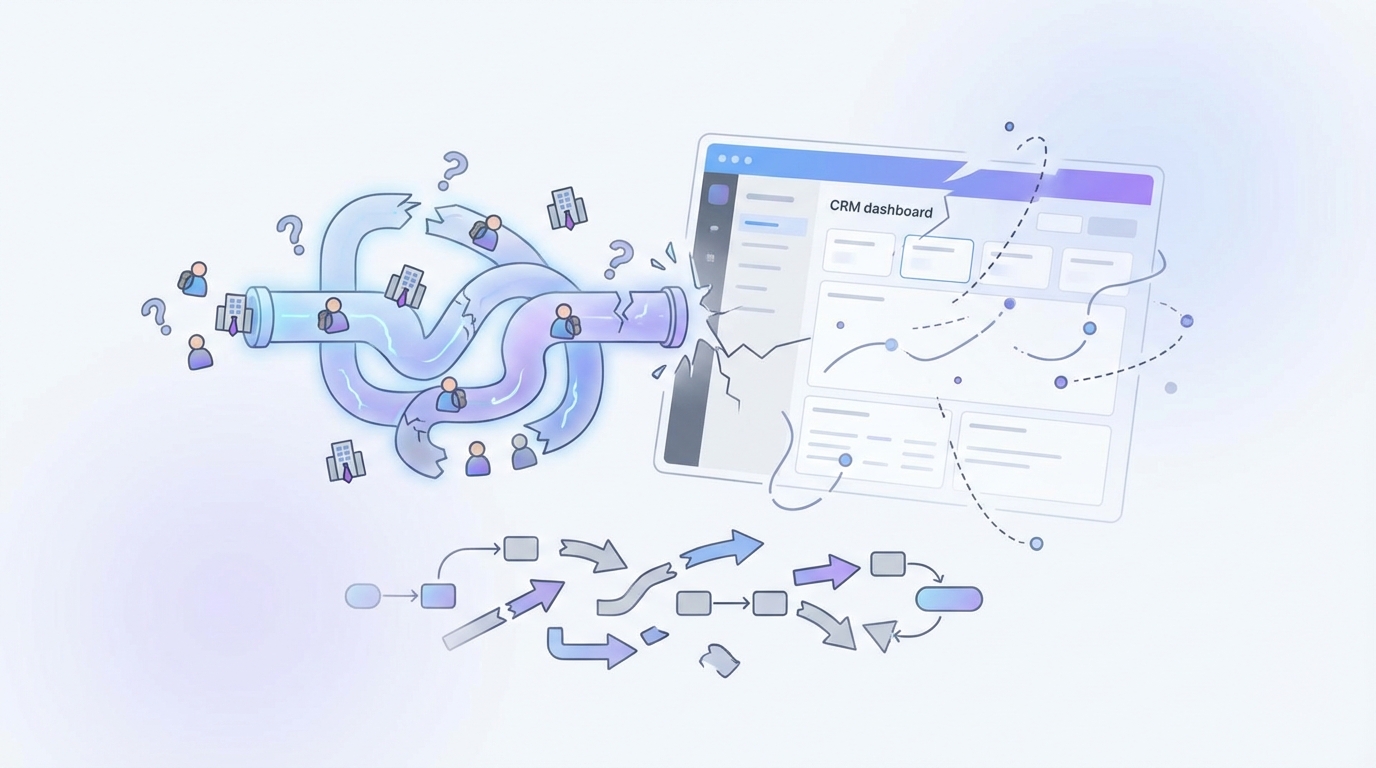
Marketing celebrates because they drove 1,000 new leads this month. Sales is incredibly frustrated because 900 of those leads are students, competitors, or companies that lack the budget to purchase the software. The result? Account Executives (AEs) waste countless hours on "discovery calls" that were doomed before the Zoom link was ever clicked. This friction between Marketing (who wants volume) and Sales (who wants quality) is a tale as old as modern B2B SaaS.
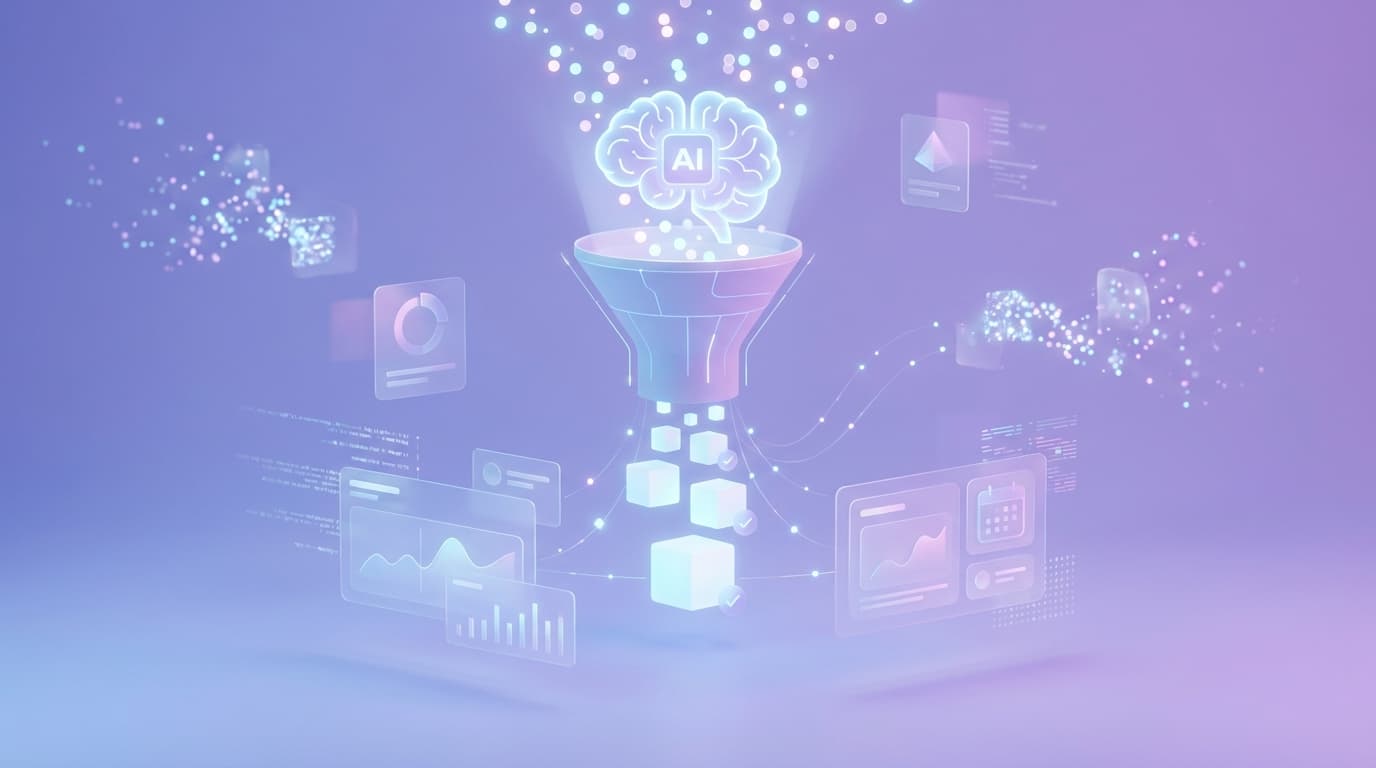
In 2026, we have finally found the bridge over this chasm: AI Lead Qualification. By deploying intelligent conversational agents, companies can programmatically filter, score, and route inbound leads with zero human intervention. Here’s a deep dive into how AI is making the unqualified discovery call extinct.
The True Cost of a Bad Lead
 Chaotic Sales Pipeline
To understand the value of AI lead qualification, we must first calculate the destructive cost of a bad lead.
Consider an Account Executive earning $150,000 OTE (On-Target Earnings). Their time is their most precious commodity. If an AE takes 5 unqualified discovery calls a week, and each call takes 30 minutes (plus 15 minutes of prep and 15 minutes of CRM post-call logging), that is 5 hours of wasted time per week.
Over a 48-week working year, that's 240 hours—or six solid weeks of work—spent talking to people who will never buy. When you multiply this across a sales floor of 10 or 20 AEs, the financial bleed is catastrophic. Not only does it cost the company in literal payroll, but it also induces massive opportunity cost. Every minute spent on an unqualified prospect is a minute stolen from closing a legitimate, high-ACV enterprise deal.
Furthermore, bad leads destroy morale. AEs want to close deals, not act as human filters for marketing campaigns.
Enter the AI-Powered Qualification Engine
 AI Agent Qualifying
Historically, companies tried to solve this with static forms. They added required fields to their "Request Demo" pages: Company Size, Budget, Job Title. But forms are inherently flawed. Long forms kill conversion rates; short forms let bad leads through.
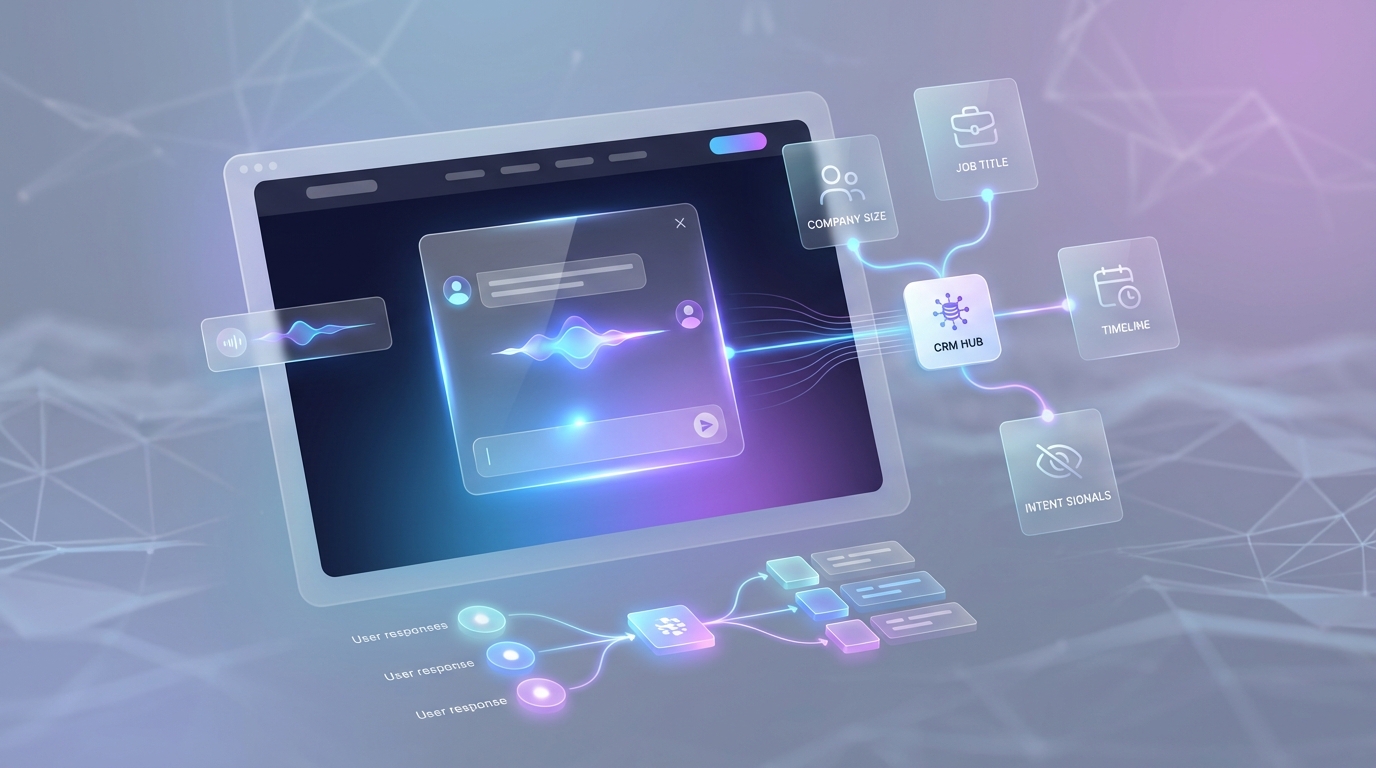
AI Lead Qualification completely flips this dynamic. Instead of a static form, the visitor interacts with a dynamic AI conversational agent—like LeadAdvisor AI.
How it Works in Practice
- The Hook: A visitor lands on your site and clicks "Get a Demo." Instead of a form, the AI assistant opens a chat interface.
- The Conversation: The AI asks qualifying questions naturally over the course of a normal conversation. It doesn't interrogate; it converses.
- Dynamic Logic: If a visitor says, "I'm just doing a school project," the AI recognizes this immediately. It gracefully ends the sales flow, perhaps linking them to a student resource page, and never alerts the sales team.
- The Routing: If the visitor is a Director of IT at a 500-person company actively looking to replace a legacy system, the AI recognizes the high intent. It immediately surfaces the calendaring widget for the appropriate Enterprise AE.
Frameworks: Teaching AI to Qualify
An AI is only as good as the instructions it operates under. Modern AI SDR platforms allow RevOps teams to hardcode their specific qualification frameworks directly into the AI's reasoning engine.
1. BANT (Budget, Authority, Need, Timeline)
BANT is the classic qualification framework. You can prompt your AI: "During the conversation, you must ascertain the user's timeline for implementation and their role in the purchasing process. Do not offer a calendar link unless the timeline is under 6 months." The AI will seamlessly weave these inquiries into the chat. If the user says, "We're just budgeting for 2028 right now," the AI will capture the lead, nurture it, but not book a live AE call.
2. MEDDIC (Metrics, Economic Buyer, Decision Criteria, Decision Process, Identify Pain, Champion)
For highly complex Enterprise sales, MEDDIC is king. While an AI might not be able to uncover every single MEDDIC element in a 3-minute web chat, it can absolutely establish the Pain and the Economic Buyer. The AI can parse a user's prompt like, "Our current cloud costs are spiraling out of control," flag the Pain metric, and pass that explicit context to the AE before the call.
3. Custom Disqualification Parameters
Sometimes knowing who not to sell to is more important. You can instruct the AI: "We do not service B2C ecommerce companies. If a user identifies as B2C, politely inform them our software is B2B only." This instant disqualification saves immense downstream CRM clutter.
The Invisible Benefit: Perfect CRM Hygiene
 AI Sales Pipeline CRM
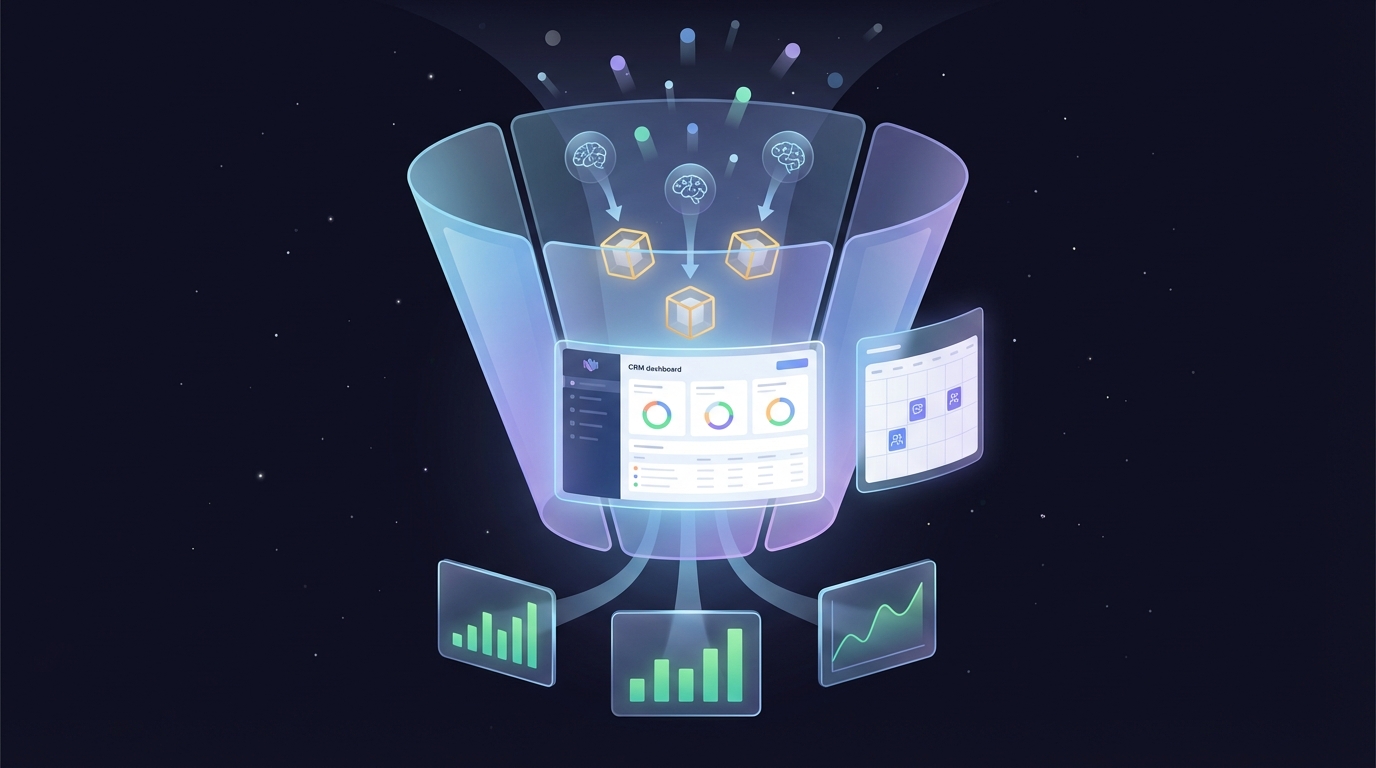
One of the most profound benefits of AI lead qualification isn't just the time saved on calls—it's the data hygiene.
Human reps are notoriously bad at data entry. They forget to log notes, they misspell company names, and they leave fields blank.
An AI Sales Agent experiences no such fatigue. When it finishes a conversation, it utilizes API integrations (which connect directly to Salesforce, HubSpot, or Pipedrive) to automatically:
- Create the Contact and Company record.
- Map the parsed data (Job Title, Pain Point, Employee Count) to the exact custom fields in your CRM.
- Attach the full transcript to the contact record.
When the AE wakes up, their calendar has a new meeting, and the CRM record is flawlessly populated with exact, verbatim quotes from the prospect regarding their business pain. The AE enters the discovery call armed with lethal context.
The Fear of "Bot-like" Interactions
A common resistance point among Sales Directors is the fear that AI will alienate prospects by feeling "too robotic." In the era of GPT-4 and beyond, this fear is largely unfounded—if the AI is configured correctly.
Modern AI lead qualification relies on dynamic generation, not decision trees. In 2018, a chatbot would say: "Are you (A) Small Business, (B) Mid-Market, (C) Enterprise?" In 2026, the AI simply asks: "What does your current tech stack look like, and how many users are you hoping to onboard?"
The AI parses the natural language response, understands that "We have about 300 seats on Zendesk" translates to Mid-Market, and updates the CRM field seamlessly. The prospect feels heard, not interrogated.
Moving Beyond "Just" Inbound
While website inbound is the most common use case, AI lead qualification is rapidly moving into outbound and event management.
- Post-Webinar Qualification: Instead of blasting a generic follow-up email to 500 webinar attendees, companies are sending SMS or email triggers powered by AI. The AI engages attendees, asks what their favorite part of the presentation was, and qualifies them on the spot based on their responses.
- Dead-Lead Revival: Every CRM is a graveyard of "Closed-Lost" or "Unresponsive" leads. An AI Agent can be deployed to systematically reach out to leads that went cold 6 months ago, checking if their priorities have shifted, and requalifying them for the current sales quarter.
The Verdict: AI Qualification is Table Stakes
The math is unavoidable. If Company A forces prospects to fill out a 7-field form and wait 24 hours for an SDR to email them, and Company B uses an AI Agent to have a highly personalized, 2-minute conversation that results in an instant calendar booking—Company B wins the deal.
In B2B SaaS, momentum is everything. AI lead qualification captures that momentum exactly when intent is highest, filters out the noise, and delivers pure, qualified signal straight to your closing team. It is no longer an experimental edge-case; in 2026, it is the fundamental baseline of a functional RevOps strategy.