The Solar Lead Generation Playbook: Scaling Pipeline with AI-Driven Qualification
The Solar Lead Generation Playbook: Scaling Pipeline with AI-Driven Qualification
In the renewable energy sector, the competition for a single residential or commercial rooftop is nothing short of a digital arms race. For a solar installation company in 2026, the primary challenge is not the installation itself; it is the sheer cost and friction of acquiring a qualified lead.
With average solar lead costs ranging from $50 to over $200 per inquiry on platforms like Google and Meta, every missed call or delayed response represents a massive breach in your marketing ROI. Furthermore, not all solar leads are created equal. A "lead" that turns out to be a renter, has an old roof, or lives in an area with high tree shading is essentially a negative-ROI event for your sales team.
The traditional model of buying raw leads and having human SDRs "power dial" them until they pick up is failing. Homeowners are increasingly shielded by their own AI filters and are less likely than ever to answer a phone call from an unknown number.
To win in this environment, solar companies must pivot to a Conversational-First Lead Engine. By deploying an autonomous AI Sales Agent specifically trained on solar qualification metrics, you can capture demand at its peak: the moment a homeowner visits your website or clicks your ad.
1. The Survival Metric: Speed to Lead and The First Five Minutes
In solar sales, the "half-life" of a lead is measured in seconds. If a homeowner submits an inquiry for a free solar quote at 9:00 PM and does not receive an immediate, intelligent response, they will be on a competitor’s website by 9:05 PM.
Research consistently shows that responding to a lead in under five minutes increases the likelihood of conversion by over nine times. In solar, where the buyer is often evaluating multiple local installers simultaneously, being the first to engage is the difference between booking a site survey and being "blended" into a pile of unreturned voicemails.
Why Humans Fail the Solar Speed Test
- Availability Gaps: Most homeowners research solar on evenings and weekends when they aren't working. This is precisely when your human sales team is offline.
- Scalability Bottlenecks: During a high-performing ad campaign, you might receive fifty leads in an hour. It is mathematically impossible for a human team to call fifty people in five minutes.
- The Follow-Up Fatigue: Solar leads often require seven to ten touchpoints to schedule an appointment. Human SDRs often give up after three or four attempts, leaving "sleeping gold" in your database.
By implementing an AI SDR, you eliminate these human constraints. The AI responds in milliseconds, 24/7, ensuring that your company is always the first to show up at the "digital door" of the prospect.
2. Automating the Solar Qualification Matrix
One of the biggest drains on solar sales productivity is the "Unqualified Appointment." Every hour a senior sales consultant spends driving to a home that isn't suitable for solar is an hour of wasted revenue.
A sophisticated solar lead generation AI does more than just say "hello." It executes a precise qualification matrix naturally through conversation.
The Four Pillars of Solar Qualification
An autonomous agent, like those powered by LeadAdvisor AI, is trained to extract these critical data points before booking a meeting:
- Roof Suitability and Ownership: "Before we schedule your survey, are you the property owner? Also, do you know approximately how old your current roof is?"
- Electricity Demand: "To calculate your potential savings, what is your average monthly utility bill or your annual kWh usage?"
- Credit and Financial Intent: "We have several zero-down financing options available. Are you interested in a lease model, or are you looking to own the system outright for the tax credits?"
- Geography and Shading: "I see you are in the San Diego area. Does your roof have significant tree cover, or is it mostly clear for sun exposure?"
By the time the lead reaches your human closer, the AI has already verified that the homeowner is qualified, motivated, and has a suitable property. This ensures your experts spend 100% of their time on "Diamond Level" closing opportunities. Learn more about this strategic redistribution of labor in our guide on The Hybrid Sales Development Playbook.
3. The 24/7 Solar Energy Consultant
A modern solar buyer is looking for an expert, not a "chatbot." They want to know about federal tax credits, the difference between monocrystalline and polycrystalline panels, and how battery backup systems like the Tesla Powerwall integrate with their home.
Unlike legacy rule-based bots that break when asked a custom question, a LeadAdvisor AI agent uses RAG (Retrieval-Augmented Generation) technology. This means the AI is trained on your specific pricing docs, technical specs, and local utility rate changes.
The Conversational Experience:
Homeowner: "I’ve heard the federal solar tax credit is changing. Can I still get the 30% credit if I sign this year?" AI Agent: "Absolutely. Under the current Inflation Reduction Act (IRA), you are eligible for the 30% Federal Investment Tax Credit (ITC) for systems installed through 2032. If we book your survey this week, we can ensure your installation is completed in time for your 2026 tax filing. Would you like to see if you qualify for any additional state-specific rebates in your zip code?"
This level of intelligence builds immediate trust. The prospect no longer feels like they are filling out a form; they feel like they are consulting with an energy professional. This trust is the "X-Factor" that drives higher appointment show-rates.
4. Bridging the Gap: Real-Time Appointment Scheduling
The ultimate goal of solar lead generation is the physical site survey or the virtual consultation. Asking a qualified prospect to "wait for a callback" to schedule their meeting introduces a massive drop-off point in the sales funnel.
A "winning" solar blog strategy highlights the necessity of frictionless conversion. Once the AI has qualified the lead, it should offer available slots directly from your consultant's calendar.
The Automated Handover Workflow
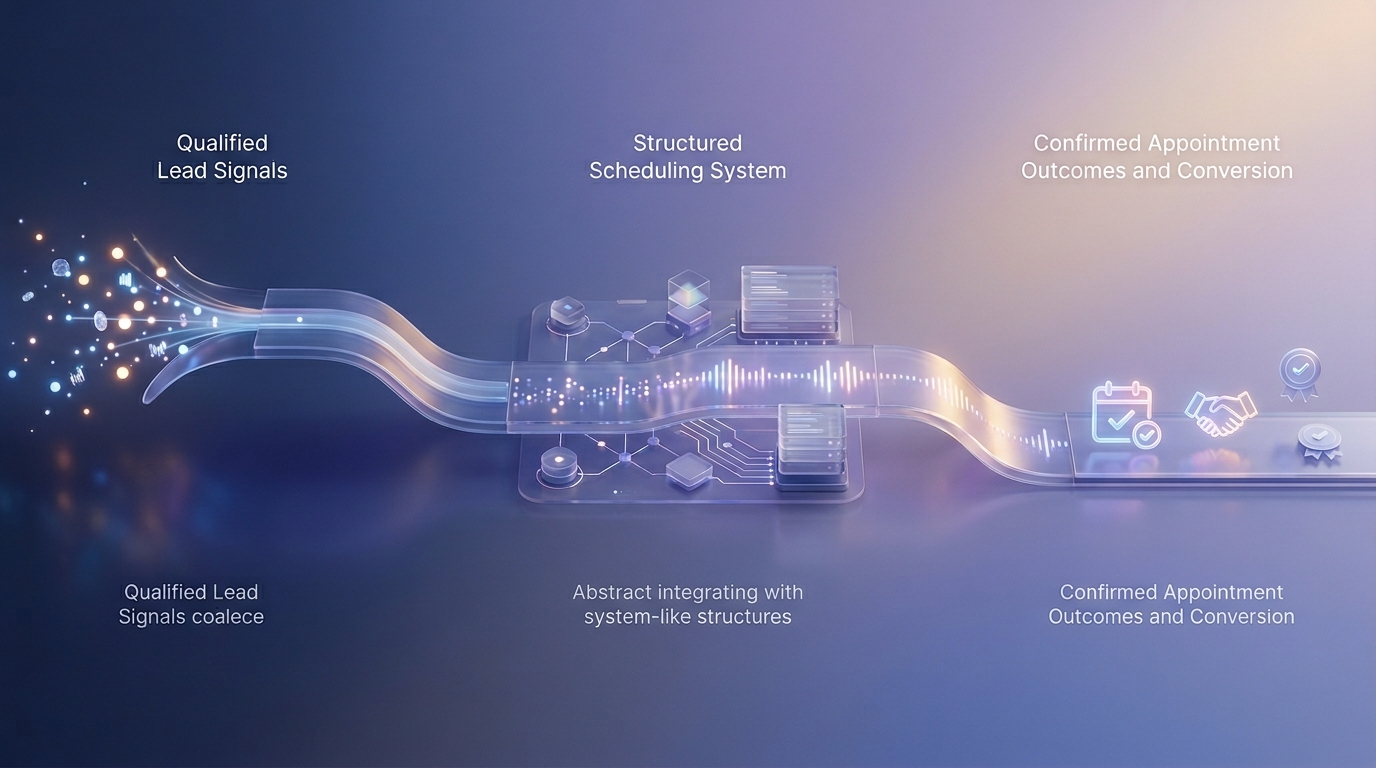
- Step 1: Contextual Qualification: The AI identifies the lead as high-intent (e.g., $250+ utility bill, roof under 5 years old).
- Step 2: Instant Booking: The AI accesses your team’s Google or Outlook calendar and offers: "Our solar consultant, Michael, is in your area this Thursday at 2 PM or Friday at 10 AM. Which works best for a quick 15-minute roof assessment?"
- Step 3: CRM Synchronization: The AI pushes the full transcript, lead data, and the booked appointment into HubSpot, Salesforce, or ServiceTitan automatically.
- Step 4: The Warm Handoff: Your sales closer wakes up with a calendar full of pre-vetted appointments, including a complete transcript of what the homeowner is concerned about (e.g., "they are worried about the aesthetics of the front-facing panels").
This seamless loop removes all administrative friction and ensures that your "Speed to Lead" is converted into "Speed to Revenue." For more on the technical side of this integration, see our article on Conversational AI for Lead Capture.
 Solar Appointment Booking Pipeline
5. The Financial ROI: Quantifying the AI Advantage
In the solar world, the economics of an AI Sales Agent are undeniable. Let’s look at the math for a medium-sized local installer:
- Ad Spend: $10,000 per month
- Leads Generated: 100 leads ($100 CPL)
- Human-Only Performance: 20% appointment set rate (due to missed calls, slow response times, and poor qualification).
- AI-Enabled Performance: 45% appointment set rate (due to 24/7 instant response and automated nurture).
By doubling the appointment set rate from the same ad spend, you effectively cut your customer acquisition cost (CAC) in half. Even if the AI agent only captures one extra "after-hours" deal per month, which has a typical solar commission of $3,000 to $7,000, the software has paid for itself many times over. To see a detailed comparison of these costs, read our deep dive on AI SDR vs Human SDR ROI.
Conclusion: Dominating the 2026 Solar Market
The solar industry is no longer about who has the loudest marketing; it is about who has the most efficient conversion engine. Standing still with static web forms and manual follow-up is a recipe for shrinking margins and lost market share.
Deploying a specialized solar lead generation AI like LeadAdvisor AI allows you to project professionalism, expertise, and hyper-responsiveness to every homeowner, 24 hours a day. It ensures that your high-value human closers are never "spinning their wheels" on a renter or an old roof, and that not a single emergency inquiry goes unanswered.
Stop relying on the "hope and pray" method of lead follow-up. Upgrade your solar business to an autonomous, intelligent sales machine.
Ready to see how an AI energy consultant can transform your revenue pipeline? Start your 14-day free trial of LeadAdvisor AI today or explore our AI Lead Qualification in 2026 guide for more advanced strategies.