Replacing Static Web Forms with Conversational AI Lead Capture
Replacing Static Web Forms with Conversational AI Lead Capture
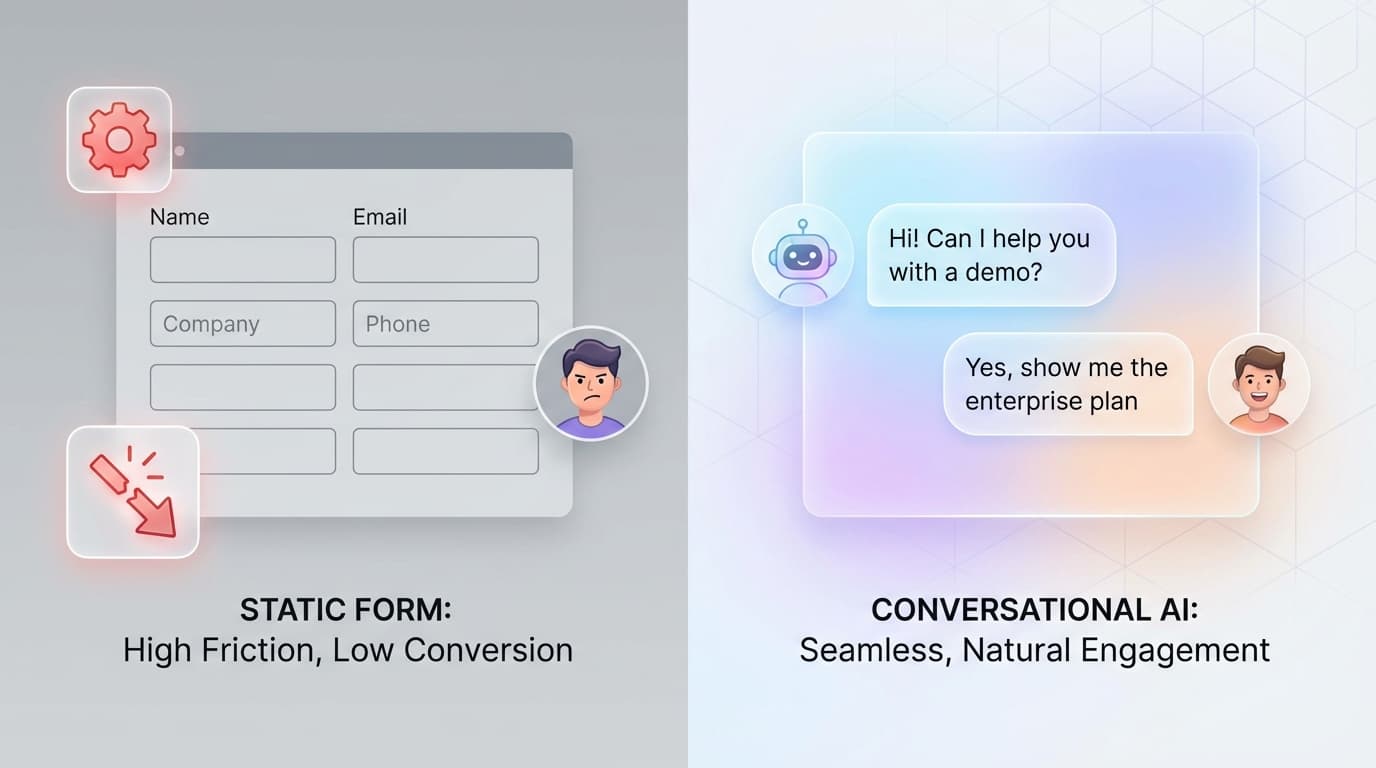
For the last two decades, the B2B SaaS playbook has remained stubbornly unchanged: drive expensive traffic to a landing page, present the user with a static "Request a Demo" web form, and pray they have enough patience to fill out seven mandatory fields.
If they do fill it out, they are greeted by an automated email promising that "someone will be in touch shortly." That "shortly" often translates to 24 to 48 hours, by which point the prospect’s buying intent has evaporated, or worse, they’ve already booked a meeting with a faster competitor.
This antiquated model of lead capture is fundamentally broken. It causes immense friction for the buyer and terrible conversion rates for the seller. In 2026, the definitive solution to this problem is Conversational AI Lead Capture. By replacing static, interrogative web forms with dynamic, intelligent chat agents, companies are seeing conversion rates skyrocket.
Here is exactly why the static form is dead, and how conversational AI is taking its place.
The Fatal Flaws of the Static Web Form
 Conversational Lead Capture Flow
To appreciate the solution, we have to look analytically at why the static form fails so consistently in modern B2B environments.
1. The Friction Epidemic
Every field you add to a web form reduces the conversion rate by an average of 11%. Marketing teams, desperate for data, often demand fields like Job Title, Company Name, Employee Count, Phone Number, and Industry. Prospects view these forms not as a gateway to a solution, but as a tedious data-entry chore. If a prospect is browsing on their mobile phone, a 7-field form is an almost guaranteed bounce.
2. The Lack of Immediate Value
When a prospect fills out a form, they don't get answers; they get added to a queue. If they have a specific question—"Does your software integrate with our custom enterprise Salesforce instance?"—they have to wait for an SDR to email them back. The static form provides zero immediate value or gratification to the user.
3. High Intent Masked as Low Intent
Static forms treat every visitor the exact same way. The CEO of a Fortune 500 company ready to buy a $500,000 software package gets the exact same "Thank you, we will be in touch" page as a college student doing a research paper. The form offers no dynamic routing based on the answers provided.
Enter Conversational AI Lead Capture
 AI Lead Qualification and Data Enrichment
Conversational AI replaces the static form with an intelligent, natural language interface. Instead of a monolithic block of fields, the website uses a smart assistant—like LeadAdvisor AI—to engage the visitor in a two-way dialogue.
How it Changes the User Experience
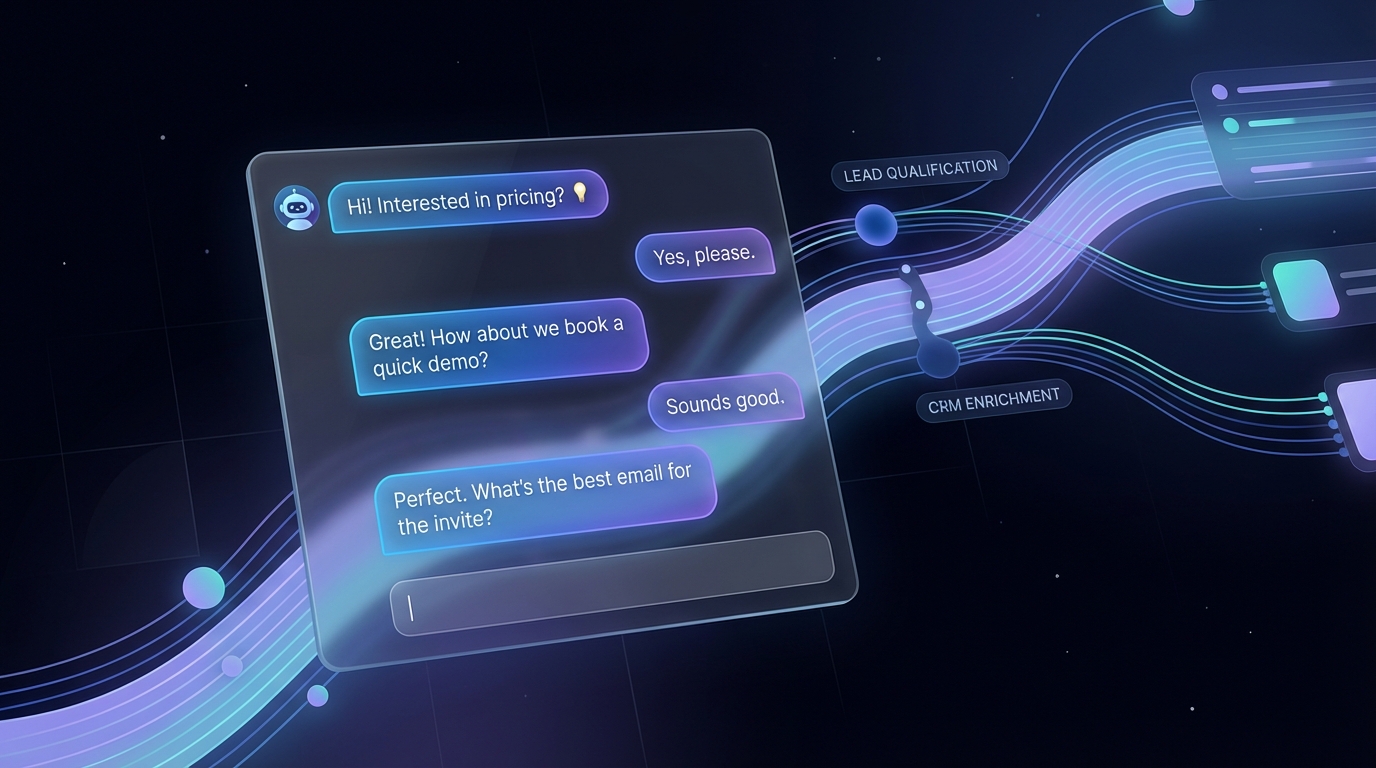
Instead of staring at a blank form, the user clicks "Get Started" and a conversational UI opens. AI Assistant: "Hi there! Are you looking to see a demo of our platform, or do you have a specific question about our features?" User: "I just want to know your pricing for a 50-person team."
The AI can immediately answer the pricing question (providing that instant value) and then naturally pivot to lead capture. AI Assistant: "For a 50-person team, you'd be looking at our Pro tier, which runs about $1,200/month. Since you're scaling a team of that size, would you like to grab 15 minutes with one of our Account Executives to see exactly how we can support you?" User: "Sure." AI Assistant: "Great! What is your work email?"
This is frictionless data gathering. The user provides their information gladly because they have already established a rapport with the AI and received the answer they were looking for.
The Psychological Shift: Dialogue vs. Interrogation
 24/7 AI Sales Assistant
The massive disparity in conversion rates between forms and conversational AI comes down to human psychology.
A form is an interrogation. It demands data before providing value. It screams, "Give us your contact info so our sales team can harass you."
A conversational AI is a dialogue. It mimics human interaction. When an AI asks for an email address mid-conversation to "send over a calendar invite," it feels natural and transactional. The friction of data entry is masked by the fluidity of the conversation. The AI asks questions one at a time, preventing the cognitive overload that occurs when a user sees a massive wall of required form fields.
Data Enrichment on the Fly
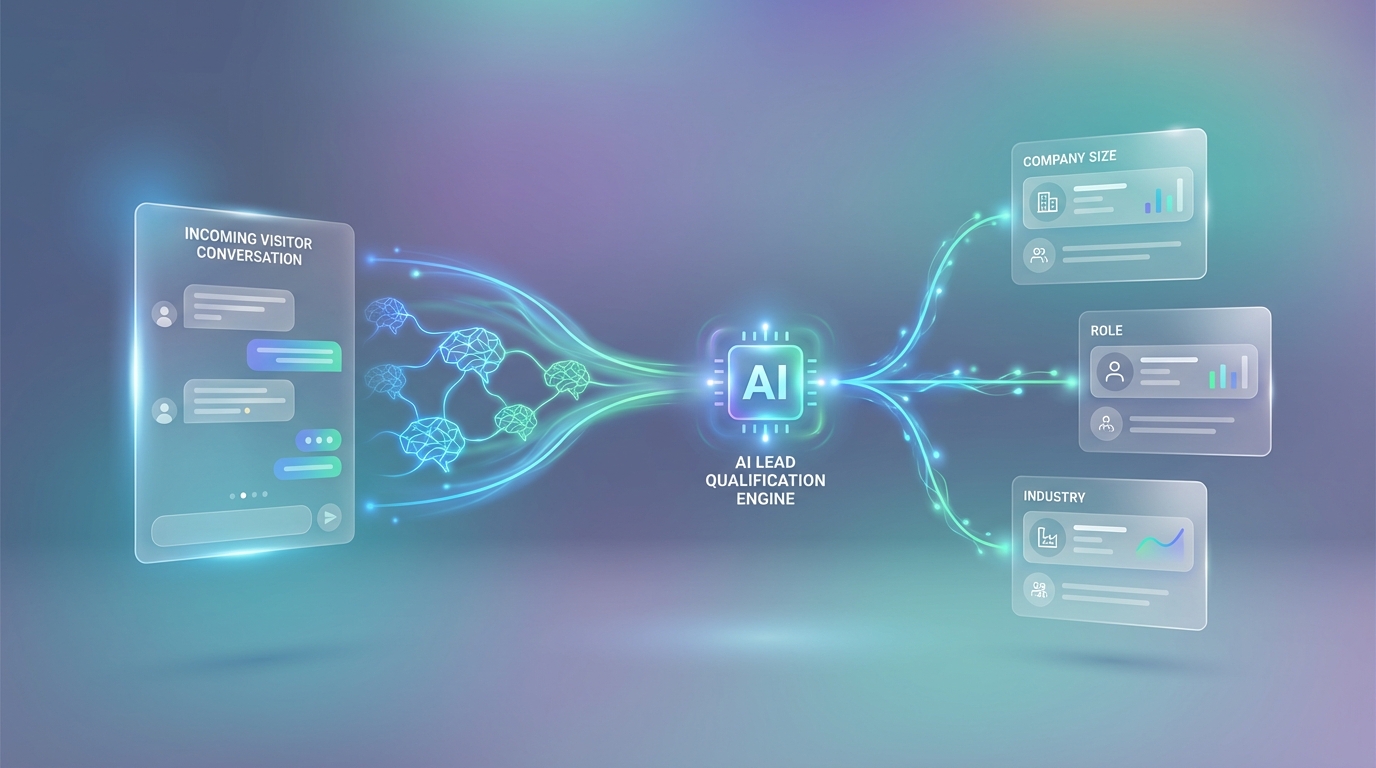
Modern AI agents don't actually need to ask 7 questions. If the user provides a work email (john.doe@acmecorp.com), the AI system can instantly use data-enrichment APIs behind the scenes (like Clearbit or ZoomInfo) to pull the company size, industry, and John’s title. The AI then routes John as a highly qualified Enterprise lead without ever asking him to manually type out his company size.
Implementing Conversational Capture Strategies
Simply slapping a chatbot on a website won't magically fix conversion rates. Implementation requires strategy.
1. Page-Specific Context
Your AI shouldn't use the same generic greeting on every page. Give the AI context.
- On the Pricing Page: "Hey, looking at the Pro tier? Let me know if you need help calculating your exact costs based on your seat count."
- On a Competitor Comparison Blog Post: "Seeing how we stack up against Competitor X? The biggest difference is our native HubSpot integration. Do you currently use HubSpot?"
This proactive, contextual outreach intercepts users at precisely the moment they are forming purchasing decisions.
2. The "Fast Lane" for VIPs
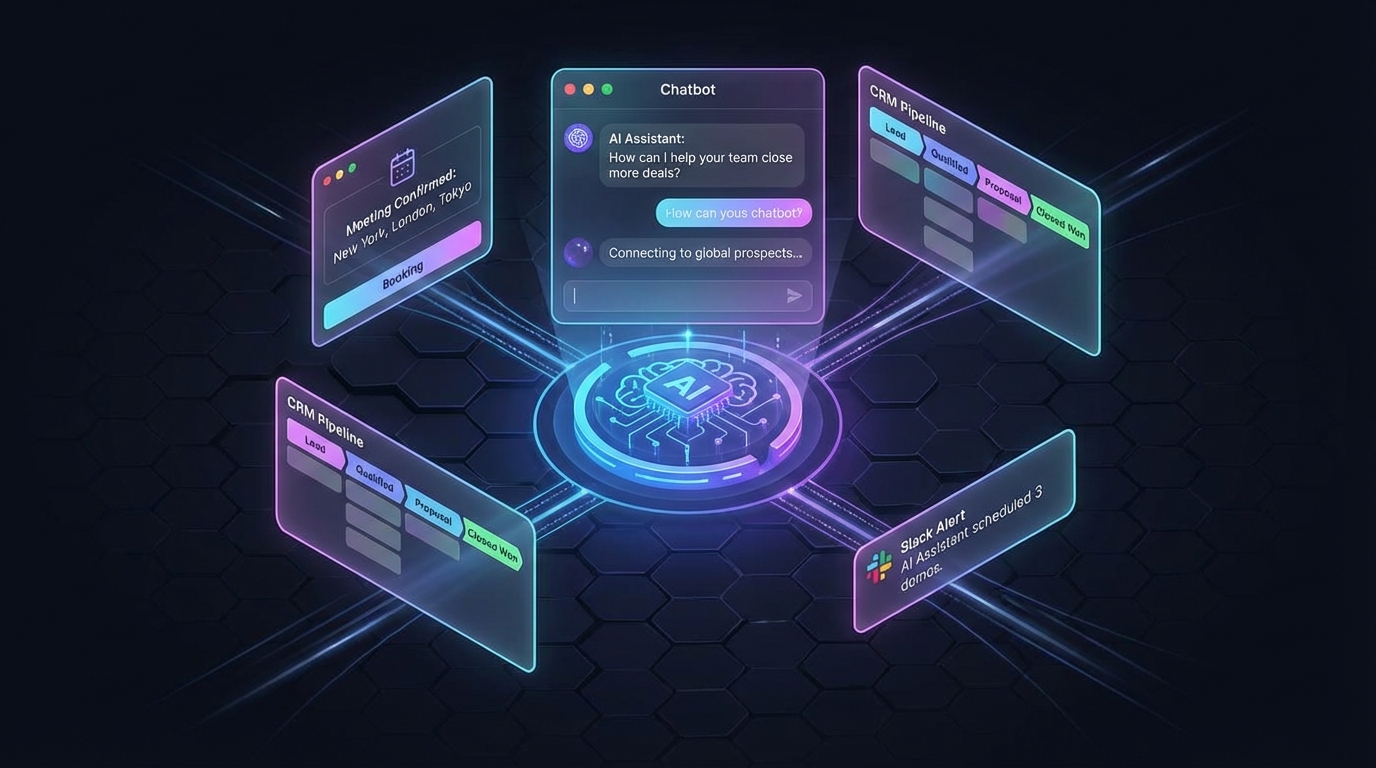
If your AI detects through conversation or data enrichment that it is speaking to a VP or C-level executive at a target account, the AI should trigger a "fast lane" protocol. Instead of pushing them to an automated calendar link, the AI can ping the assigned Account Executive in Slack, allowing the human rep to seamlessly take over the live chat in real-time.
3. Handling After-Hours Traffic
A significant portion of B2B research is done outside of local business hours. A human SDR team goes home at 5 PM. If a European buyer visits your US-based site at 10 PM EST, your static form goes into a black hole until the next morning. The conversational AI operates flawlessly 24/7, booking the meeting while your sales team sleeps.
The SEO and UX Benefits
Beyond direct lead generation, conversational AI actually improves your website's overall performance metrics.
Increased Time-on-Page
When users are actively typing and reading responses from an AI, their "Time on Page" metrics increase dramatically. Google interprets high dwell time as a signal of high-quality, relevant content, which can positively influence your organic search rankings.
Reduced Bounce Rates
Static forms often cause users to immediately hit the "Back" button upon seeing the amount of effort required. An engaging AI assistant catches their attention and pulls them into an interaction, drastically reducing bounce rates on high-value landing pages.
Overcoming Internal Objections
Making the switch from forms to AI often meets resistance from legacy marketing teams who are addicted to their specific form layouts.
"But we need to know their exact industry before we let them book a demo!" is a common complaint. The answer is simple: The AI can ask for the industry. But unlike a form, the AI will only ask after hooking the user into a conversation, resulting in a much higher completion rate.
Furthermore, transitioning doesn't require ripping out your entire tech stack. Platforms like LeadAdvisor AI integrate seamlessly with existing CRMs. When the AI captures a lead, it pushes that data identically to how a form would push it—creating the contact, mapping the custom fields, and ensuring Marketing attributes the source correctly.
Conclusion: The Death of the Web Form
The static web form is a relic of the Web 2.0 era. It was designed for a time when users were willing to wait patiently for information. Today’s B2B buyer demands the immediacy of B2C experiences. They want answers instantly, and they want to book meetings on their own terms.
Conversational AI Lead Capture aligns perfectly with these modern buyer behaviors. By dismantling the friction of static forms and replacing it with intelligent, real-time dialogue, B2B companies are not just generating more leads—they are generating better, higher-intent leads, and closing them faster than ever before.
If your website still relies exclusively on a "Contact Us" form, you are actively losing pipeline to competitors who have already embraced the conversational future.