
How RAG Solves AI Hallucinations for Business Chatbots
How RAG Solves AI Hallucinations for Business Chatbots
When business leaders consider deploying an AI sales agent or customer support bot, their first concern is rarely the price. Their first concern is reputation.
We have all read the viral stories: a car dealership's AI accidentally selling an SUV for one dollar, or an airline's generic chatbot inventing a refund policy that the company was later legally bound to honor.
This phenomenon, where an AI confidently invents false information, is called a "hallucination." For an enterprise, a hallucinating AI is not a funny internet meme; it is a massive legal liability and a brand disaster.
However, the technology driving LeadAdvisor AI completely eliminates this risk through a structural architecture called Retrieval-Augmented Generation (RAG).
In this article, we will explain exactly why public AI models hallucinate in the first place, and how RAG mathematically constrains an AI agent to only speak the absolute truth about your business.
1. Why Do AI Chatbots Hallucinate?
To understand the solution, you must first understand the problem.
Large Language Models (LLMs) like ChatGPT are fundamentally probability engines. They were trained on the entire public internet to predict the next most likely word in a sentence. They do not "know" things in the way a human knows things; they synthesize patterns.
If you ask a general LLM, "What is the return policy for Acme Corp?", the AI might not find the exact answer in its training data. Because its primary goal is to be helpful and conversational, it will use probability to guess what a standard return policy usually looks like. It might confidently declare, "Acme Corp offers a 30-day money-back guarantee," simply because that is statistically the most common return policy it read on the internet.
If Acme Corp actually has a strict "All Sales Final" policy, the AI has just hallucinated, and the customer is now infuriated.
2. Enter Retrieval-Augmented Generation (RAG)
 RAG Retrieval Process
If a general LLM is like a brilliant student taking an exam without any textbooks trying to guess the answers, RAG is the equivalent of an open-book test.
With Retrieval-Augmented Generation, you are no longer relying on the AI's vast, public internet memory. Instead, you are providing it with a closed, private library of facts (your knowledge base) and explicitly instructing the AI: "You may only use the documents in this specific library to answer the question."
How the RAG Pipeline Works in LeadAdvisor AI
When a customer asks a question on your website, LeadAdvisor AI follows a strict sequence:
- The Query: The customer asks, "Do you offer bulk discounts for orders over 50 units?"
- The Retrieval: Before the AI attempts to generate a single word, the system searches your specific uploaded documents (pricing PDFs, internal FAQs) for paragraphs mathematically related to "bulk discounts" and "50 units."
- The Augmentation: The system retrieves the exact paragraph from your pricing PDF: "Bulk orders exceeding 40 units receive an automatic 15 percent invoice discount." It attaches this fact to the customer's question.
- The Generation: The AI reads the retrieved fact and forms a conversational response: "Yes! For orders over 40 units, we automatically apply a 15 percent discount to your invoice."
The AI is not guessing. It is simply citing the exact documentation you provided it, translating your dense PDFs into friendly, conversational dialogue.
3. The Power of "I Don't Know"
The true test of a business-grade AI is how it handles questions it does not know the answer to.
If a user asks your LeadAdvisor agent a highly technical question that is not covered in any of your uploaded PDFs or website URLs, the RAG architecture actively prevents the AI from inventing a plausible-sounding lie.
When the retrieval step fails to find a matching document, the system prompt triggers a safety fallback. The AI will respond honestly: "I do not have the specific documentation to answer that accurately. However, I can escalate this to our technical engineering team immediately. What is the best email for them to reach you?"
In the business world, an immediate "I don't know, let me get a human" is infinitely more valuable and secure than a confidently invented falsehood.
4. Keeping Your Knowledge Base Current
A RAG system is only as accurate as the documents driving it. If your pricing changes, you cannot have your AI quoting last year's rates.
Historically, updating a chatbot required a developer to go in and reprogram the decision trees or fine-tune an entire model (a process costing thousands of dollars). With LeadAdvisor AI, updating your agent's brain takes three seconds.
If you update your pricing tier, you simply delete the old PDF from your LeadAdvisor dashboard and upload the new one. The AI instantly updates its internal logic. There is no retraining, no coding, and no downtime. The moment the new document is ingested, the AI begins quoting the new prices flawlessly.
Conclusion: Trust Through Architecture
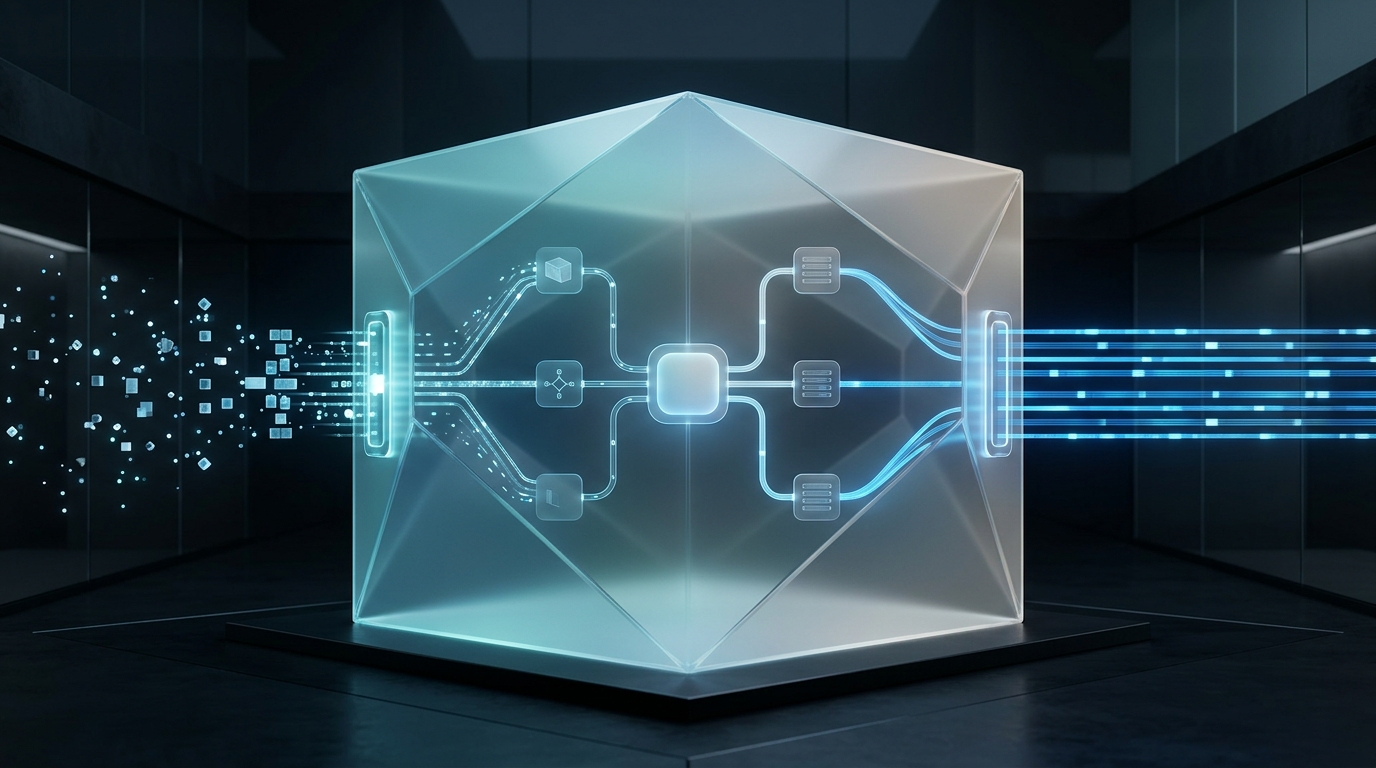 Enterprise Trusted AI System
You cannot afford to put a wildcard on the front page of your website. If an AI agent cannot be trusted to represent your brand flawlessly, it is a liability rather than an asset.
Retrieval-Augmented Generation bridges the gap between the incredible conversational fluidity of modern AI and the strict factual requirements of enterprise business. By mathematically constraining the agent's knowledge to your proprietary documents, you completely eliminate the risk of hallucination.
Your customers get immediate, human-like answers 24/7, and you get the absolute peace of mind that your AI will never make a promise your business cannot keep.
Ready to deploy a secure, fact-based AI agent on your site? Start your 14-day free trial of LeadAdvisor AI today.