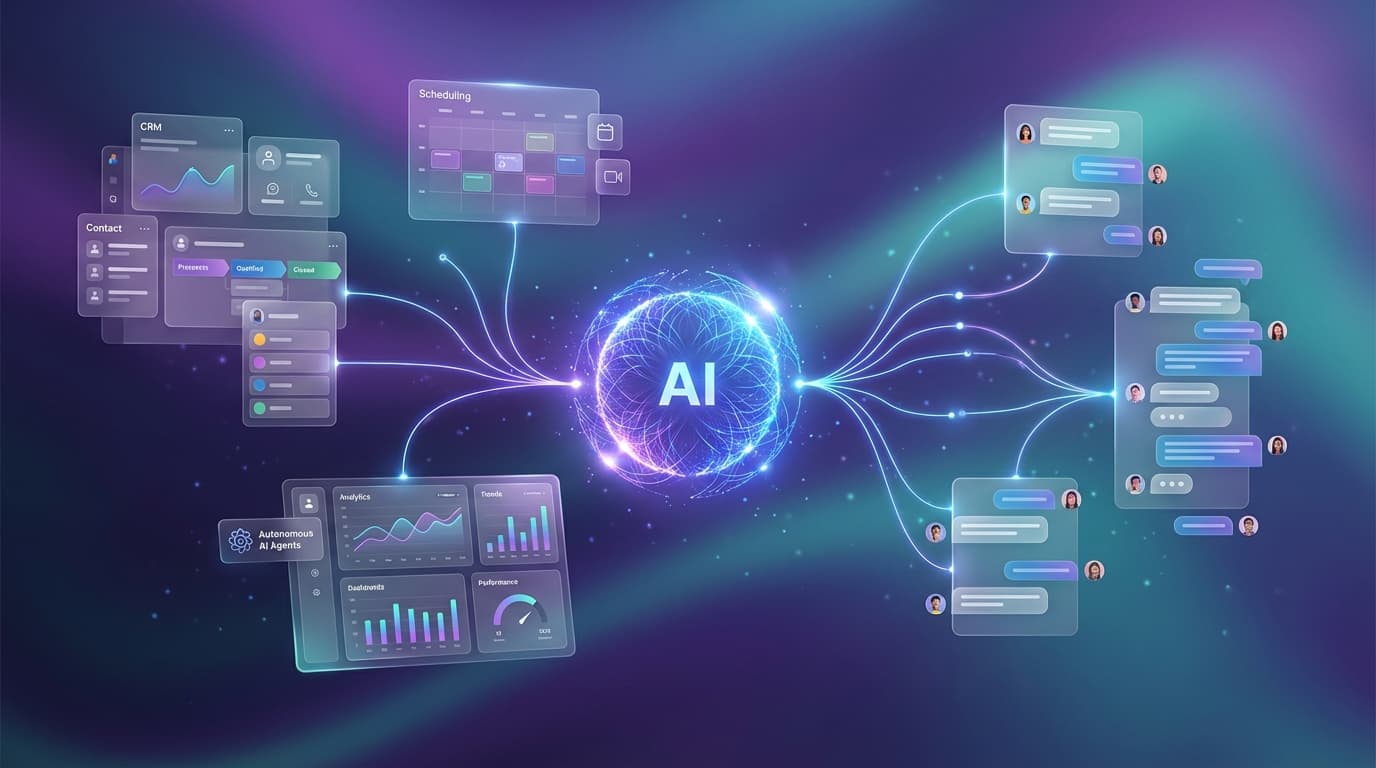
The Ultimate Guide to AI Sales Agents for B2B Startups
The Ultimate Guide to AI Sales Agents for B2B Startups
In the ultra-competitive landscape of B2B startups, scaling revenue efficiently is the definitive metric of success. Startups operate under immense pressure: acquire customers faster, reduce Customer Acquisition Cost (CAC), and maximize Customer Lifetime Value (LTV). Traditionally, solving the "pipeline problem" meant throwing more human capital at the issue—hiring phalanxes of Sales Development Representatives (SDRs) to dial down lists, blast cold emails, and chase inbound leads.
But as we venture deeper into 2026, the playbook has entirely shifted. The era of the AI Sales Agent (or AI SDR) is not merely approaching; it has fully arrived, completely redefining the economics of startup growth.
This comprehensive guide breaks down what AI Sales Agents are, why they are essential for modern B2B startups, and exactly how you can implement them to transform your revenue engine.
1. What Exactly is an AI Sales Agent?
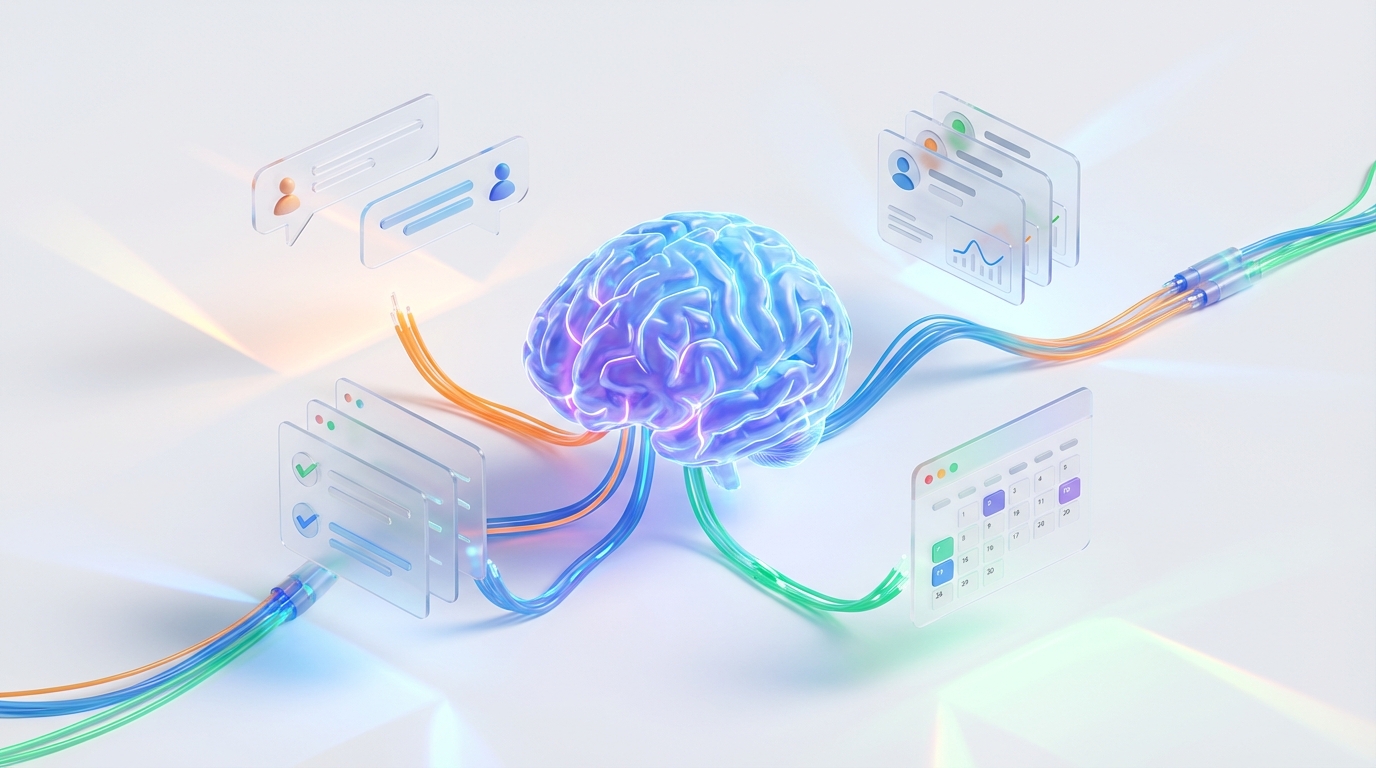
An AI Sales Agent is an autonomous or semi-autonomous software system powered by advanced Large Language Models (LLMs) and built specifically to execute revenue-generating workflows. Unlike the rigid, rule-based chatbots of the 2010s that frustrated users with "I did not understand that" error messages, modern AI Sales Agents process natural language with near-human comprehension.
These agents don't just "talk"; they act. An AI Sales Agent can:
- Engage inbound visitors instantly when they land on your pricing or solution pages.
- Qualify leads by conducting conversational discovery based on your specific criteria (BANT, MEDDIC, etc.).
- Overcome objections by recalling case studies, citing security compliance (like SOC 2), and referencing dynamic pricing models.
- Book meetings directly onto a human Account Executive’s calendar.
- Follow up via email or text if a prospect goes dark.
They act as an indefatigable extension of your team, operating 24/7, 365 days a year, without ever requiring a coffee break, a sick day, or an equity package.
 What Exactly is an AI Sales Agent?
2. The Traditional SDR Model is Breaking Under Pressure
Before understanding why AI Sales Agents are the solution, we must examine why the current B2B SDR model is fracturing.
The Rising Cost of Human Capital
Hiring, training, and retaining talent has never been more expensive. An entry-level SDR in a tech hub demands a high base salary, commission structures, software licenses (Salesforce, Apollo, LinkedIn Sales Navigator), equipment, and benefits. The fully loaded cost of a single SDR often exceeds $100,000 annually. For early-stage startups with tightly managed burn rates, this cost is prohibitive.
The Ramp-Up Time Dilemma
It typically takes three to four months for a new SDR to become fully productive and understand the product well enough to handle objections fluidly. If that SDR leaves after 12 months (which is the industry average tenure), the startup loses a massive percentage of their investment to downtime.
The Speed-to-Lead Impossibility
Harvard Business Review studies consistently show that companies the contact a lead within 5 minutes are 100 times more likely to connect and 21 times more likely to qualify that lead compared to waiting 30 minutes. Achieving a sub-5-minute response time globally, across multiple time zones, is logistically impossible for a lean human team.
3. How AI Sales Agents Revolutionize B2B Growth
Deploying an AI Sales Agent effectively solves the aforementioned problems while introducing entirely new vectors for growth.
A. Instant, 24/7 Speed to Lead
AI never sleeps. If a VP of Engineering in London visits your SaaS site at 2:00 AM New York time and asks a highly technical question about API rate limits, your AI agent is there. It answers the question, assesses the buyer's intent, and offers to schedule a demo—all within seconds. This immediate gratification drastically increases the conversion rate of high-intent visitors who might otherwise bounce to a competitor.
B. Scalability Without Bound
When a marketing campaign hits and drives a 500% spike in traffic, a human team gets overwhelmed. Leads fall through the cracks, response times plummet, and marketing ROI suffers. An AI Sales Agent scales infinitely and instantaneously. It can converse with 10 prospects or 10,000 prospects simultaneously with exact, unwavering quality.
C. Perfect Consistency and Compliance
Humans have bad days. Humans forget to mention a new feature, skip a qualifying question, or incorrectly log data in the CRM. An AI Sales Agent follows your exact playbook every single time. It asks the right discovery questions, pitches the brand voice consistently, and logs every data point cleanly into your CRM (like Salesforce or HubSpot).
D. Multi-Lingual Capabilities
B2B SaaS is inherently global. A startup in Austin might have perfectly viable customers in Berlin, Tokyo, and São Paulo. AI Sales Agents effortlessly switch between 50+ languages natively. This allows lean startups to test international markets without hiring localized teams.
4. The Architecture of a High-Performing AI SDR
What makes a good AI Sales Agent tick? It’s not just a wrapper around ChatGPT. High-performing solutions in 2026, like LeadAdvisor AI, are complex platforms with specific architectures.
Knowledge Base Ingestion
The brain of the agent needs data. Modern agents ingest your entire digital footprint: your website, help center, PDF case studies, past sales call transcripts, and Slack channels. This Retrieval-Augmented Generation (RAG) architecture ensures the AI doesn’t hallucinate and only strictly provides answers based on your truth.
The Reasoning Engine
The agent uses specialized reasoning to understand context. If a user says, "I'm currently using Competitor X, but they are too expensive," the AI doesn't just say, "We are cheaper." It reasons: This is a competitive switch opportunity. I should highlight our unique value propositions, suggest a specific migration feature, and immediately attempt to book a meeting.
Workflow and System Integrations
The AI must act. This means deep, bi-directional integrations. It must read real-time availability from Cal.com or Calendly, push lead objects into HubSpot, trigger Slack alerts for VIP accounts, and pull dynamic pricing matrixes via API.
5. Identifying the Perfect Use Cases for Your Startup
Not every startup should use an AI Sales Agent in exactly the same way. The application depends heavily on your specific Go-to-Market (GTM) motion.
Use Case 1: The Product-Led Growth (PLG) Engine
If your startup offers a freemium or self-serve tier, your site likely receives high traffic but low direct sales engagement. An AI assistant can sit within the product dashboard, pinging users who are stuck on onboarding, answering technical questions, and upselling them to the paid "Enterprise" tier based on feature usage limitations.
Use Case 2: The High-Ticket Enterprise Sales Funnel
For startups selling six-figure ACV (Annual Contract Value) software, every lead is precious. Here, the AI acts as a concierge. It doesn't push aggressively; instead, it answers complex security questions upfront, gathers the organizational chart details smoothly, and seamlessly hands the conversation off to a human Account Executive via live chat if the lead meets the VIP threshold.
Use Case 3: The Outbound Amplifier
While this guide focuses heavily on inbound, AI SDRs also manage outbound responses. When your outbound campaigns yield replies (ranging from "Interested" to "Not right now" to "Who are you?"), the AI can read the sentiment of the email, draft the perfect contextual response, and keep the thread alive until a meeting is booked.
6. How to Successfully Implement an AI Sales Agent
The difference between AI success and failure often lies in the implementation phase. A poorly trained AI can frustrate users, brandishing your startup as "cheap."
Step 1: Define the Objective Line
What is the primary goal? Is it to reduce support ticket volume, to increase the demo booking rate, or to qualify out bad leads? Define the Key Performance Indicators (KPIs) before launching.
Step 2: Curate the Training Data
Garbage in, garbage out. Do not just point the AI at your website and hope for the best. Curate specific documents. Write a "Personality Prompt" (e.g., "You are a helpful, concise, and professional sales engineer. You never use emojis. You always prioritize answering the question before trying to book a meeting.")
Step 3: Map the Handoff Paths
AI works best in tandem with humans, not entirely replacing them. Define the trigger words or scenarios requiring "Human Agent Takeover." If a user says "I want to talk to a human," or if the AI detects a massive projected deal size, it should smoothly bridge the gap to a live rep.
Step 4: Test Extensively
Before pushing the agent to your live homepage, run it in a sandbox environment. Have your own sales team "attack" it. Ask it trick questions, pretend to be an angry customer, and ask about competitors. Polish its responses based on these stress tests.
Step 5: Launch, Monitor, and Iterate
Once live, review the conversation transcripts daily for the first two weeks. AI platforms provide Analytics Dashboards where you can see exactly where the AI struggled or where users dropped off. Refine the knowledge base weekly.
7. The Economics of the Move
Let's break down a hypothetical ROI model for a B2B startup.
- Traffic: 10,000 unique website visitors/month.
- Traditional Conversion to Demo: 1.5% (150 demos).
- Close Rate: 20% (30 new customers).
- ACV: $10,000. (Total new pipeline closed: $300,000/month).
Now apply an AI Sales Agent. Due to 24/7 engagement, proactive messaging, and zero form friction, the site conversion rate increases from 1.5% to 2.5%.
- Traffic: 10,000.
- New Conversion to Demo: 2.5% (250 demos).
- Close Rate: 20% (50 new customers).
- ACV: $10,000. (Total new pipeline closed: $500,000/month).
By investing perhaps a few hundred or a thousand dollars a month on an AI Sales platform, the startup generates an additional $200,000 in monthly revenue. The ROI is staggering, dwarfing the returns of simply hiring another SDR or slightly increasing ad spend.
8. Common Myths and Misconceptions
Despite the overwhelming data, some founders remain hesitant. Let's debunk the top myths.
Myth: "AI will replace my entire sales team." Reality: AI replaces the robotic, repetitive tasks of the sales process. It qualifies the tirekickers and answers the FAQ routing. This elevates your human sales team, allowing Account Executives to spend 100% of their time actually selling to qualified buyers.
Myth: "Our product is too complex for an AI to understand." Reality: LLMs are routinely passing the Bar Exam and medical boards. If you have documentation, technical whitepapers, and spec sheets, the AI can absolutely understand and relay your complex product architecture—often more accurately than a junior human rep.
Myth: "Buyers hate talking to bots." Reality: Buyers hate talking to bad bots. Buyers hate waiting 48 hours for an email reply. If a bot gives perfectly accurate answers instantly, buyers vastly prefer it over navigating a maze of support delays or speaking to a pushy human rep before they are ready to buy.
9. Looking Forward: The B2B Arms Race
We are amid a monumental shift. B2B startups that adopt AI SDRs today are reaping the first-mover advantage: capturing leads their competitors sleep through, operating with vastly superior unit economics, and scaling without the friction of massive HR operations.
By 2028, having an AI Sales Agent on your website won't be a competitive advantage; it will be baseline table stakes. Much like how websites replaced physical brochures, conversational AI frameworks are rapidly replacing static lead generation forms.
The time to deploy your AI revenue engine is now.
Ready to Build Your Ultimate AI Sales Engine?
If reading this guide has you thinking about your own pipeline efficiency, it’s time to see the technology in action. Explore how LeadAdvisor AI can transform your website from a static digital brochure into a highly tuned, 24/7 conversion engine. Start your free trial today or Book an interactive demo with our team to explore a bespoke solution.