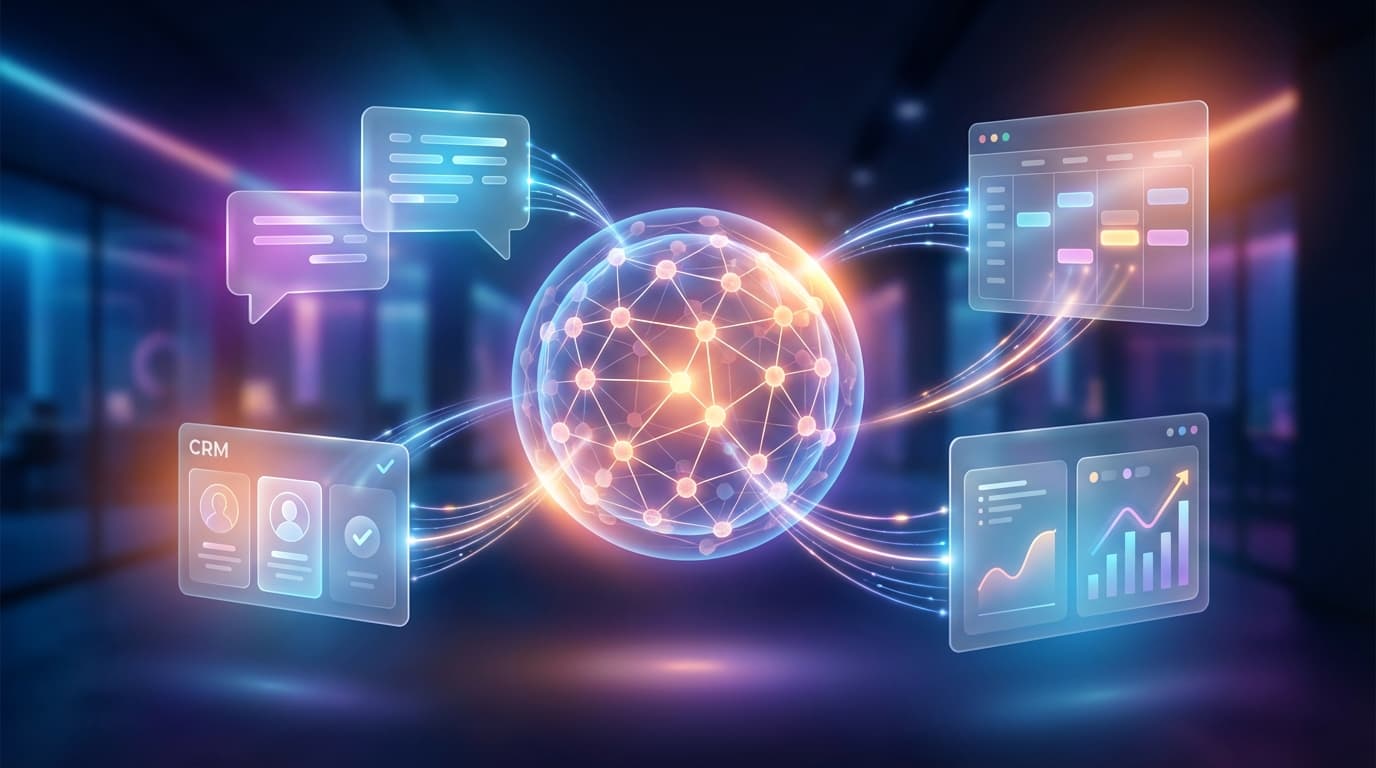
The Future of AI Sales: From Chatbot to Closer
The Future of AI Sales: From Chatbot to Closer
The era of the "dumb chatbot" is officially over.
If you are currently relying on a decision-tree chat widget on your B2B SaaS website to capture leads, you are actively losing revenue. We all know the experience: a visitor lands on your pricing page, a small bubble pops up in the corner, and the bot enthusiastically asks, "Hi! How can I help you today?" But the moment the user types a nuanced question about SOC 2 compliance or API rate limits, the bot immediately surrenders. It offers three highly irrelevant links from an FAQ page, demands an email address, and promises that "a human will be in touch within 24 to 48 hours."
In 2026, B2B buyers do not have 24 hours. They operate in a hyper-accelerated market. If they are evaluating your software, they are also evaluating three of your competitors simultaneously. If your website acts as a static roadblock while a competitor's website offers an instant, dynamic conversation, the competitor wins the deal. Period.
This seismic shift in buyer expectations has birthed the era of the Autonomous AI Sales Agent. Let's explore why the traditional chatbot died, how AI agents actually work, and why they are systematically taking over the role of the modern inbound SDR.
1. The Anatomy of a Failed Legacy System
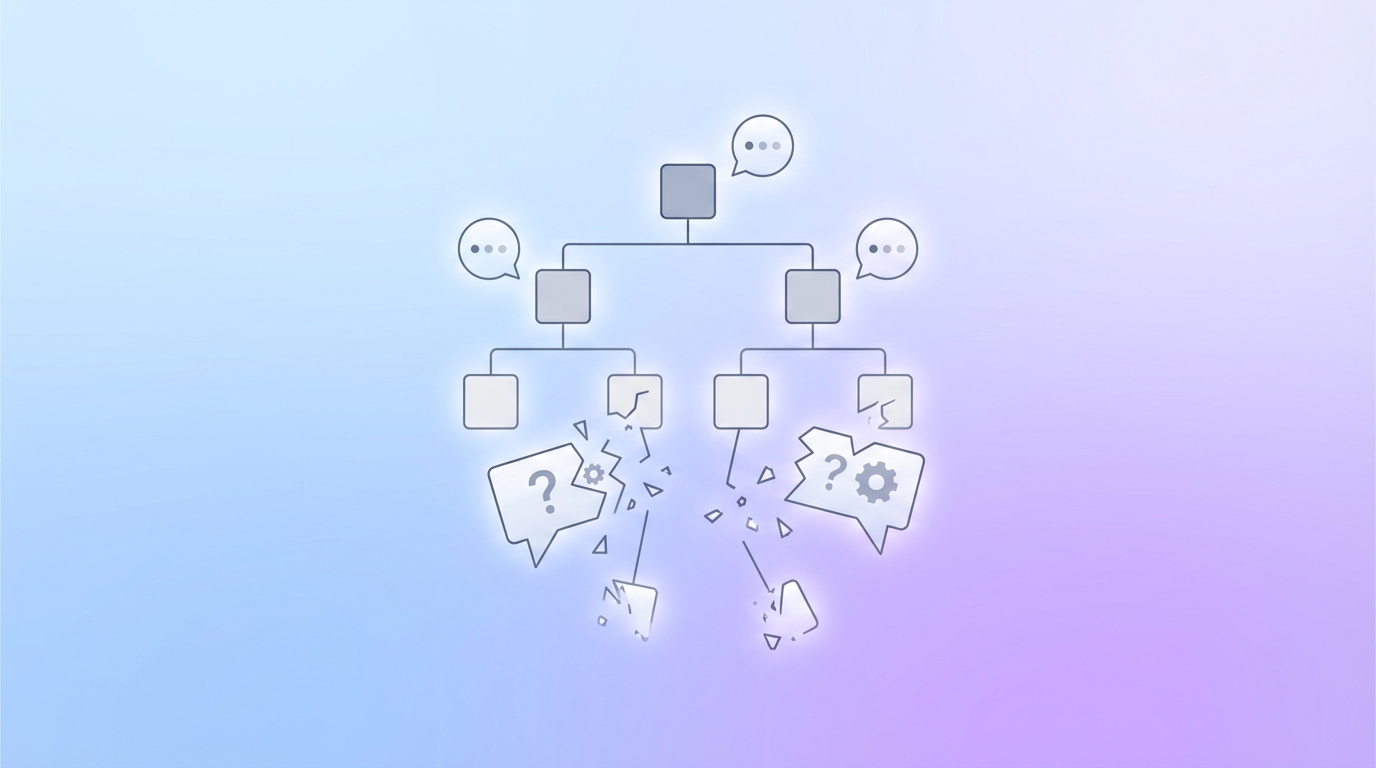
To understand the future, we must diagnose the failures of the past. Legacy chatbots relied entirely on conversational flowcharts built by marketing teams.
The Rule-Based limitation: These bots were programmed with "IF/THEN" logic. IF user clicks 'Pricing', THEN show standard pricing tiers. IF user types 'Bug', THEN ask for email and route to support.
This architecture made them incredibly fragile. Human behavior is not linear, and B2B purchasing questions are rarely simple. The moment a user veered off the predetermined script, the bot broke. This friction deeply alienated high-intent buyers. C-level executives looking to spend six figures on enterprise software do not have the patience to navigate a phone-tree style menu via text.
Furthermore, these bots were siloed. They existed purely on the marketing website layer. They could not look up a user's account history in Salesforce, they could not check real-time availability on an Account Executive's calendar, and they certainly could not negotiate.
 Advanced AI Sales Agent
2. The Rise of the AI Sales Agent
An Autonomous AI Sales Agent—powered by highly tuned Large Language Models (LLMs)—is fundamentally different. It does not follow a flowchart. It operates using Contextual Intelligence and Goal-Oriented Reasoning.
The Engine of Context
When an AI Sales Agent engages a visitor, it is armed with context. Through Retrieval-Augmented Generation (RAG), the bot has ingested your entire company's brain: every whitepaper, every technical spec sheet, every previous human sales call transcript, and your exact pricing matrices.
If a user asks, "We are currently using [Competitor X] but we are frustrated with their reporting limitations. Does your platform allow for custom BI dashboard exports?"
A legacy bot would say: "I didn't understand that. Please leave your email."
An AI Sales Agent reasons through the prompt:
- Identify: The user named a direct competitor.
- Extract Intent: The primary pain point is reporting limitations.
- Retrieve Knowledge: Access our documentation regarding Custom Dashboards and our specific Battle Card for [Competitor X].
- Execute Response: "Absolutely. Unlike [Competitor X's] rigid templates, our platform features a completely open BI engine where you can export any custom metric directly via CSV or API. Since you are looking to migrate, I'd highly recommend a 15-minute technical demo with our engineering team to show you exactly how easy the data migration is. Does Tuesday afternoon work?"
This happens in less than two seconds. The AI answered the highly specific technical question, acknowledged the competitive context, positioned a unique value proposition, and immediately pivoted to closing the meeting.
3. The New Inbound Pipeline: Total Automation
 AI Sales Automation System
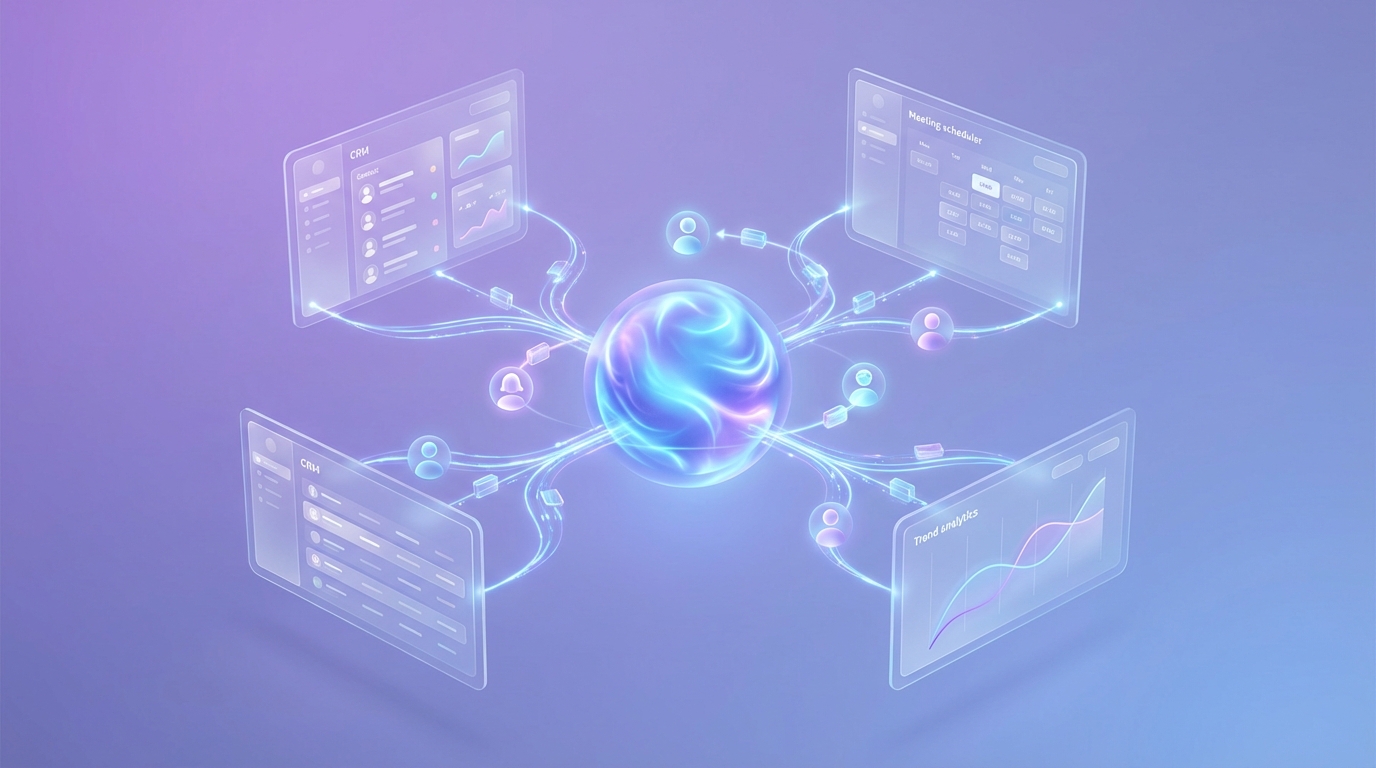
When deployed effectively, an AI Sales Agent effectively clones your top-performing, most technically knowledgeable Sales Development Representative (SDR) and scales them infinitely.
Here is what the optimal, fully-automated inbound flow looks like in 2026:
Phase 1: Proactive, Data-Enriched Engagement
The AI does not wait to be clicked. Using IP-enrichment APIs (like Clearbit or 6sense), the AI detects that the visitor navigating your site is browsing from the corporate network of a Fortune 500 company on your target account list.
The AI pops up proactively: "Welcome back, team at Microsoft! I see you're exploring the Enterprise security features. Let me know if you need specific details on our SOC 2 Type II compliance or our dedicated instance hosting."
This hyper-personalized greeting immediately establishes credibility and relevance.
Phase 2: Instant Conversational Qualification
The goal of inbound sales is not to book every meeting; it's to book qualified meetings. AEs' time is expensive.
Through natural conversation, the AI seamlessly executes your company's qualification framework (whether that is BANT, MEDDIC, or a custom matrix). It subtly asks about timeline, current tech stack constraints, and team size.
If the AI discovers the user is a college student doing a research project, it politely deflects them to the free-trial page or the educational blog, keeping the human sales calendar pristine.
Phase 3: Autonomous Objection Handling
Sales happens at the point of friction. When a prospect raises an objection, momentum can stall.
Prospect: "Your Pro tier is $500 a month? That seems really high. We only have a few users right now."
The AI Agent doesn't panic. It relies on its training to handle the objection gracefully: AI: "I completely understand being budget-conscious. The $500/month actually covers unlimited seats, so as you scale your team this year, your costs won't increase exponentially. We also include entirely free white-glove onboarding which usually costs $1,500. Would you be open to a quick call to map out if the ROI makes sense for your specific growth targets?"
Phase 4: The Seamless Close
The holy grail of inbound efficiency is frictionless scheduling. The AI integrates directly with tools like Cal.com or Calendly. When the prospect agrees to a meeting, the AI drops an interactive calendar widget directly into the chat interface.
The prospect picks a time, the calendar invite is sent, the corresponding record in HubSpot or Salesforce is created natively via API, and the full transcript of the conversation is attached to the contact record.
When your Account Executive wakes up the next morning, they have a highly qualified Discovery call booked on their calendar, fully documented with the prospect's exact pain points. They literally did zero prospecting work to acquire that meeting.
4. The Economics Speak for Themselves
The financial impact of transitioning from static forms and dumb chatbots to AI Sales Agents is staggering.
The Harvard Business Review famously established that the odds of qualifying a lead decrease by over 80% if you take longer than 5 minutes to respond to an inquiry. In a globalized economy with buyers across multiple time zones, staffing a human SDR team 24/7/365 to maintain a 5-minute SLA is financially ruinous for most startups and mid-market companies.
An AI Sales Agent operates with an SLA of milliseconds. It never takes a vacation, it never asks for a commission increase, and it never has a "bad day" where it misinterprets a buyer's intent.
By increasing the speed-to-lead to zero, companies are routinely seeing their inbound website conversion rates double or triple simply by capturing intent at the exact moment it peaks.
5. What Happens to the Human Sales Team?
 AI Automation and Human Sales
A common and understandable fear is that AI agents will completely replace human sales teams. This is a misunderstanding of how complex B2B sales actually function.
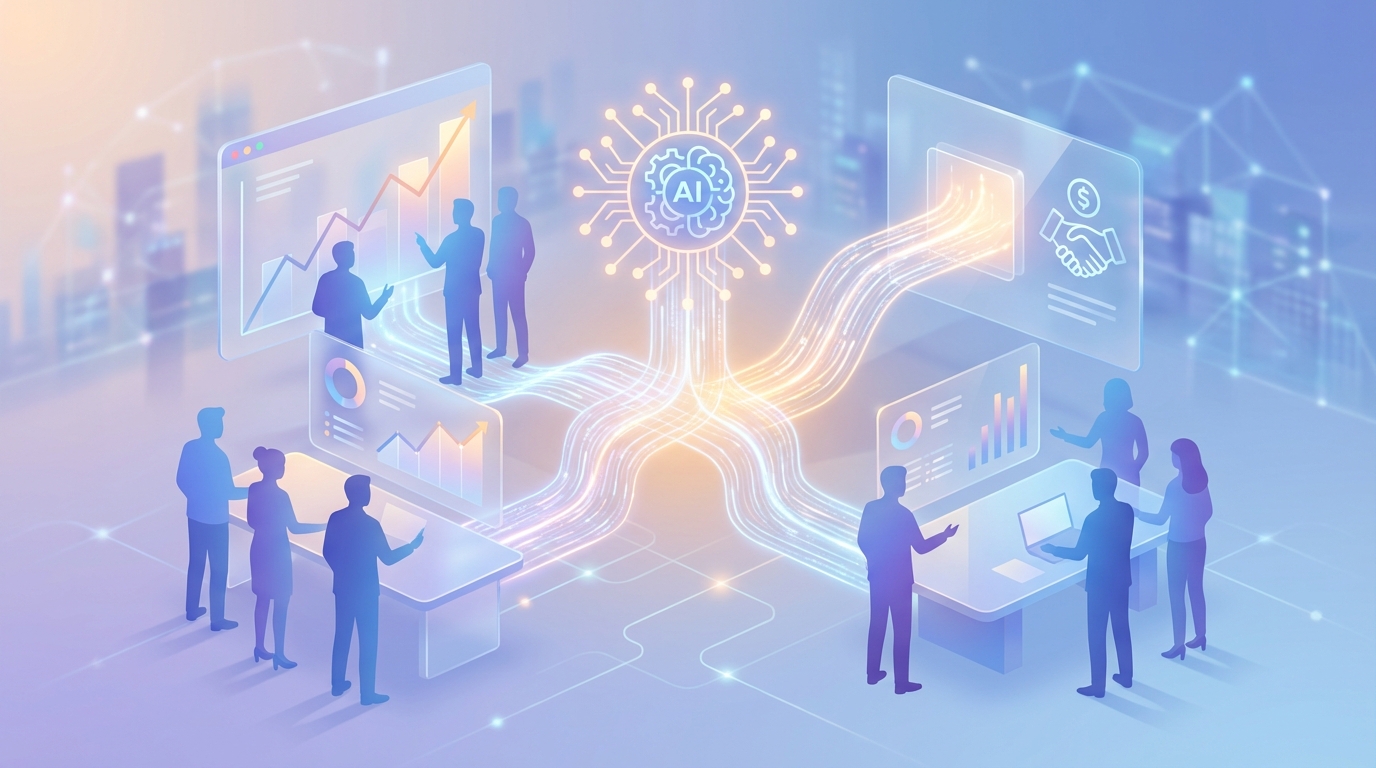
AI is phenomenal at top-of-funnel mechanics: qualification, technical FAQ answering, routing, and scheduling. But AI cannot play golf with a VP of Procurement. AI cannot navigate the complex, unwritten political hierarchies inside a target enterprise. AI cannot read a room during a high-stakes zoom negotiation and realize the CFO is silently disagreeing.
By completely automating the SDR function, you elevate your human talent. Account Executives no longer have to waste 40% of their work week digging through ZoomInfo, sending cold emails, or disqualifying tire-kickers on 15-minute discovery calls.
Your human sales team gets to spend 100% of their time actively selling to qualified buyers who are ready to engage.
Conclusion: The Urgency of Adoption
The technology curve in 2026 is brutally unforgiving. Autonomous AI Sales Agents are no longer experimental tech reserved for massive tech conglomerates; they are easily deployable SaaS products (like LeadAdvisor AI) accessible to any startup.
If your website is still functioning as a passive digital brochure, forcing buyers to fill out "Contact Us" forms or endure decision-tree chatbots, you are leaking pipeline every single hour.
The future of sales is not about working harder or hiring more entry-level reps. It is about deploying tireless, hyper-intelligent software to capture demand at lightspeed, allowing your elite human closers to do what they do best. The shift is already happening—make sure your revenue engine is equipped to compete.