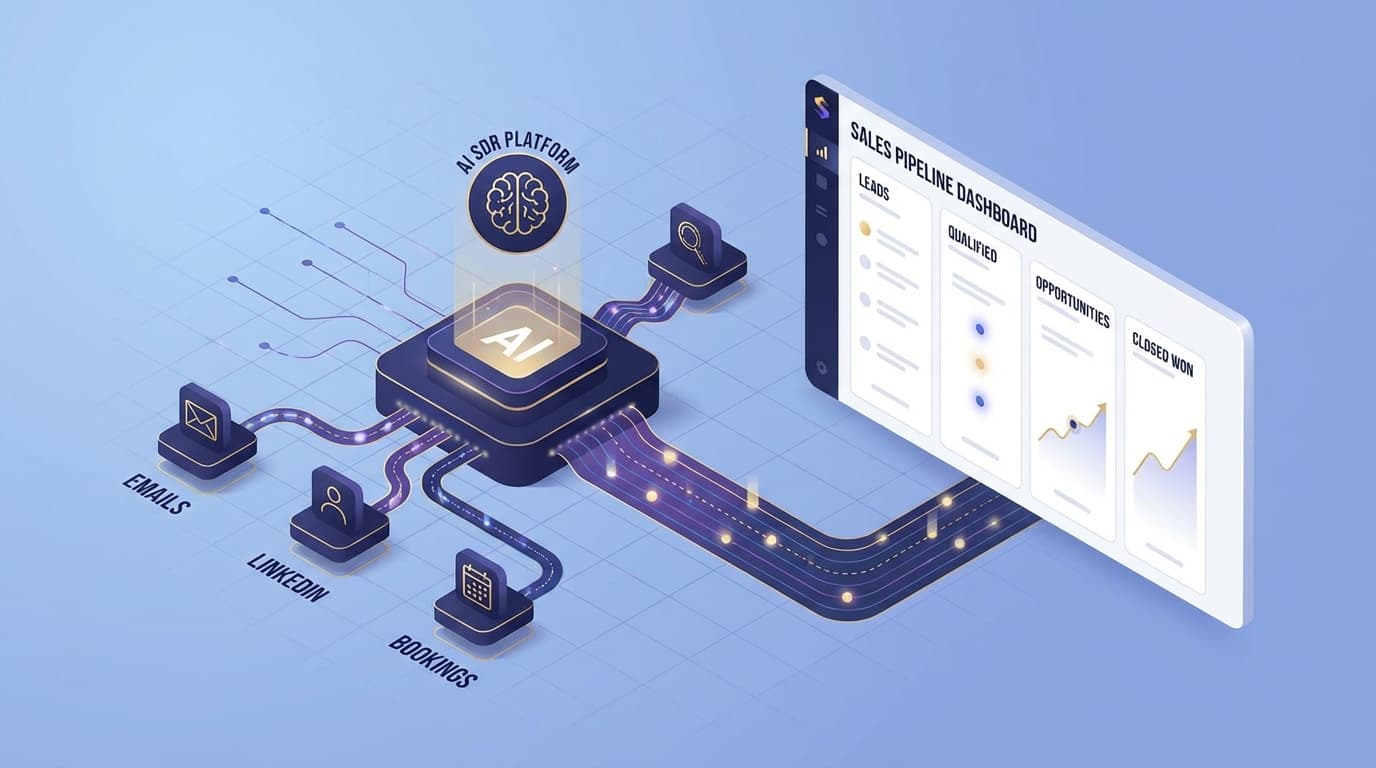
The Role of AI SDRs in Scaling Outbound and Inbound Revenue
The Role of AI SDRs in Scaling Outbound and Inbound Revenue
The Sales Development Representative (SDR) has long been the unsung hero of the B2B SaaS revenue engine. They are the frontline infantry: cold calling, sending thousands of emails, parsing through bad data, and attempting to connect with prospects who are actively trying to avoid them. It is widely considered one of the most grueling jobs in tech.
Historically, the only way for a company to scale its top-of-funnel pipeline was to hire more SDRs. If one SDR could generate 10 qualified meetings a month, and the company needed 50 meetings, the solution was simply to hire four more SDRs. But this linear scaling model is inherently flawed. It scales linearly in cost while yielding diminishing returns in output due to management overhead, ramp-up time, and inevitable churn.
In 2026, the paradigm has fundamentally shifted. The introduction of the AI SDR (Artificial Intelligence Sales Development Representative) allows companies to decouple pipeline generation from human headcount. Let’s explore how AI SDRs are revolutionizing both inbound and outbound revenue generation.
What Exactly is an AI SDR?
An AI SDR is not merely a tool for a human to use (like an auto-dialer or an email sequencing platform). It is an autonomous software entity designed to be the SDR.
Powered by advanced Large Language Models (LLMs) and deeply integrated into a company’s CRM and data providers, an AI SDR can:
- Research prospects by scraping LinkedIn and company websites.
- Draft highly personalized outbound emails based on that research.
- Read and interpret the sentiment of replies (e.g., distinguishing between a hard "No," a "Not right now," and an "Interesting, tell me more").
- Handle initial objections natively.
- Seamlessly coordinate calendar bookings for human Account Executives (AEs).
- Instantly engage and qualify inbound website traffic via conversational UI.
1. Scaling Inbound Revenue with Unmatched Speed
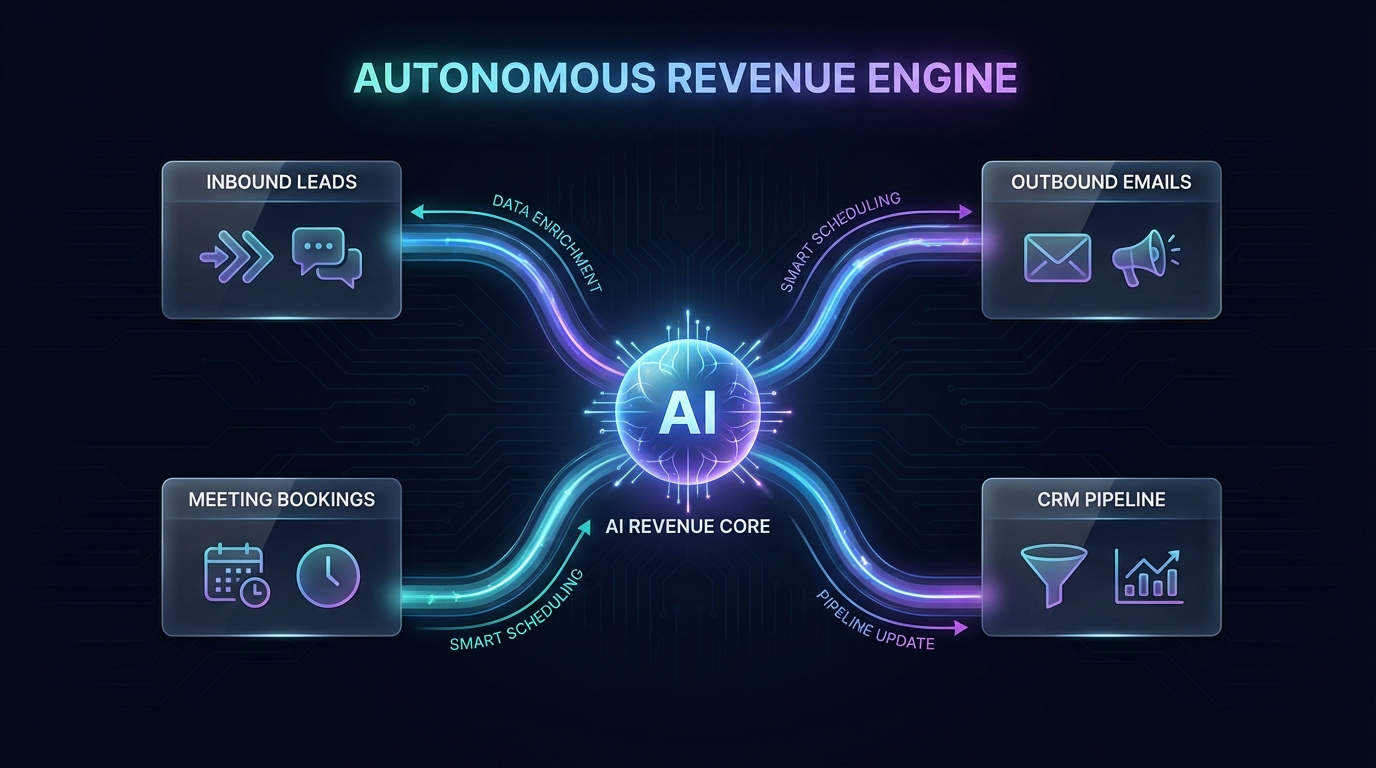 Autonomous Revenue Engine
When a marketing team spends tens of thousands of dollars driving targeted traffic to a website, the final mile—the inbound SDR response—is the most critical point of failure.
The Problem of Human Speed
Humans manage inbound leads sequentially. If an SDR comes into the office on Monday morning and has 50 inbound leads sitting in the queue, they must review them one by one. By the time they reach lead number 50, that prospect has already been waiting for 72 hours. In B2B sales, a lead's conversion probability drops exponentially after the first 5 minutes.
The AI Solution: Infinite Parallel Processing
An AI SDR processes inbound inquiries in parallel. If 500 leads download a whitepaper simultaneously, the AI SDR can send 500 perfectly personalized, contextual text messages or emails within three seconds.
Furthermore, when deployed as a conversational agent directly on the website (like LeadAdvisor AI), the AI SDR engages the high-intent prospect while they are still looking at the pricing page. It doesn't ask for an email and promise to follow up; it qualifies the prospect and books the meeting right then and there.
Inbound Qualification at Scale
Not all inbound leads belong on an AE’s calendar. An AI SDR tirelessly filters the signal from the noise. It asks the necessary qualifying questions (BANT or MEDDIC criteria) and politely deflects unqualified leads (like students or extremely small businesses) without wasting a minute of human sales time.
2. Revolutionizing Outbound Prospecting
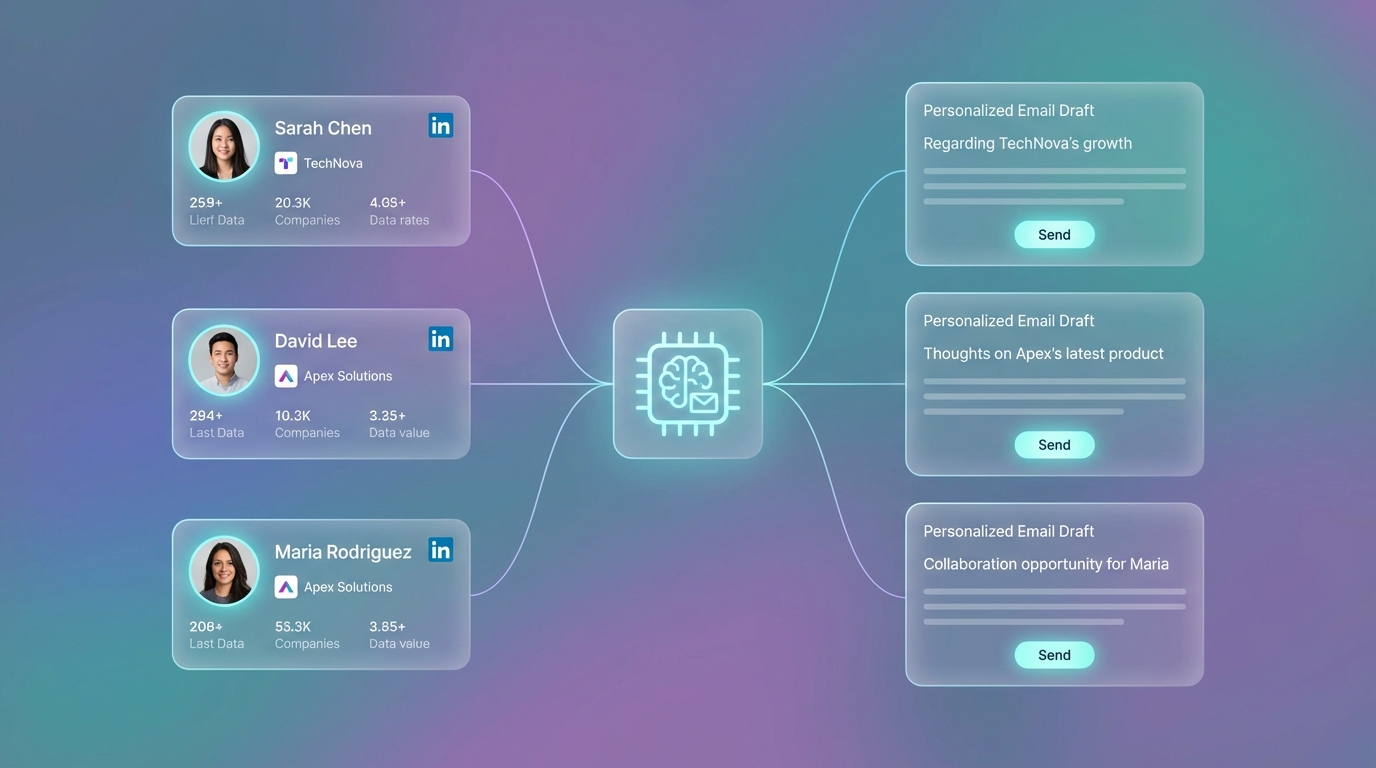 AI Hyper-Personalized Outreach
While inbound is about capturing existing demand, outbound is about creating it. This is where AI SDRs truly alter the unit economics of a startup.
The Death of the Generic Sequence
For years, outbound meant loading 5,000 scraped emails into an outreach tool and blasting a generic 4-step sequence. "Hi [First Name], I noticed you work at [Company]..."
Buyers are immune to this. Open rates have plummeted, and domain reputations are easily ruined. To succeed in modern outbound, outreach must be hyper-personalized. But expecting a human SDR to research 5,000 individual prospects and write 5,000 bespoke emails is mathematically impossible.
Autonomous Hyper-Personalization
An AI SDR can execute hyper-personalization at massive scale.
- The Trigger: The AI monitors the internet for buying signals. For example, it detects that a target company just hired a new VP of Engineering (a classic trigger for buying new dev tools).
- The Research: The AI scrapes the new VP's LinkedIn, reads their recent posts, and scans the company's recent press releases.
- The Draft: The AI drafts an email: "Hi Sarah, congrats on the recent move to Acme Corp as VP of Engineering. I saw in your recent post that you're focusing heavily on reducing cloud costs this year. Our platform typically reduces AWS spend by 20% for teams of your size without requiring infrastructure changes. Worth a brief chat?"
- The Execution: The AI sends the email, completely autonomously.
The AI can do this for 10,000 prospects a day with the exact same level of granular personalization that would take a human SDR 45 minutes per email to research.
Handling the Replies
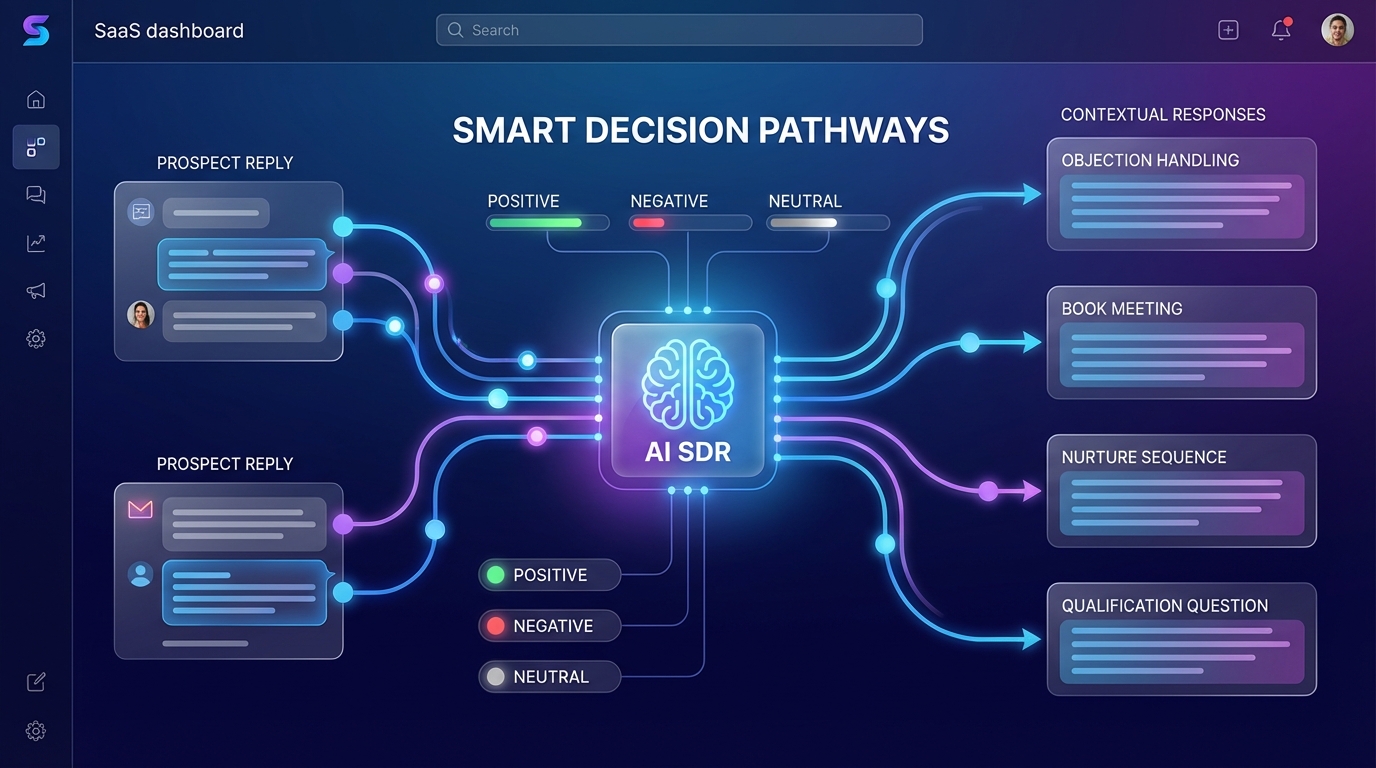 AI SDR Handling Replies
Perhaps the greatest superpower of the AI SDR in outbound is handling the replies. When a prospect replies, "This sounds interesting, but we are locked into a contract with Competitor X until Q3," a traditional automated sequence breaks. A human has to intervene.
An AI SDR reads the reply, understands the objection, and responds contextually: "Completely understand, Sarah. Many of our current clients migrated from Competitor X. We actually offer a contract-buyout program specifically for teams stuck in Q3 renewals. I'd love to show you how it works—how does next Tuesday look?"
3. The Economics of Scale
Let's look at the financial impact of replacing linear human scaling with AI scaling.
A traditional SDR team of 5 people might cost $450,000 annually in base salaries and commissions, plus another $50,000 in software licenses. If that team generates 100 qualified meetings a month, your Cost Per Meeting (CPM) is incredibly high. If you want to scale to 200 meetings, you have to spend another $500,000.
An AI SDR platform operates on a SaaS or usage-based pricing model. It might cost $2,000 a month. But that AI SDR can do the prospecting work of 50 humans. It doesn't need a LinkedIn Sales Navigator license, it doesn't need health insurance, and it doesn't suffer from burnout.
By deploying an AI SDR, a company's Customer Acquisition Cost (CAC) plummets. Revenue growth is no longer tethered to HR constraints.
4. Elevating the Human Rep
A common misconception is that AI SDRs will eliminate sales jobs entirely. In reality, they eliminate the robotic parts of sales jobs.
By offloading the soul-crushing work of cold outreach, list building, and initial objection handling to AI, companies can elevate their human sales talent. Account Executives no longer have to prospect. They spend 100% of their day doing what humans are uniquely qualified to do: building emotional rapport, navigating complex organizational politics, negotiating contracts, and closing deals.
The SDR role isn't dying; it is evolving into an AI Manager or RevOps Specialist. Future SDRs will be responsible for prompting the AI, defining the ideal customer profiles, setting the strategic boundaries for outreach, and monitoring the AI's success metrics.
5. Potential Pitfalls and Best Practices
Scaling revenue with AI SDRs is powerful, but it requires careful implementation to avoid damaging your brand.
Brand Voice Constraints
An AI SDR must sound like your company. It cannot hallucinate features you don't have, and it shouldn't sound like a generic robot. Spend significant time dialing in the "System Prompt" of your AI. Define the tone (e.g., authoritative, casual, direct) and provide it with a strict knowledge base.
The "Human in the Loop"
In the early days of deployment, it is crucial to maintain a "Human in the Loop" architecture. Many platforms allow human reps to review the AI's drafted responses before they are sent. Once the AI proves it can consistently handle objections accurately, the training wheels can come off, allowing it to reply autonomously.
Clean Data is Everything
An AI cannot personalize an email if your CRM data is garbage. If "Company Name" in your database is listed as "Acme Corp LLC Inc.", the AI will sound ridiculous when it uses that exact string in an email. Invest heavily in data enrichment and cleaning before unleashing an AI prospector.
Conclusion: The Final Unfair Advantage
In hyper-competitive B2B markets, speed and personalization are the defining factors of success. Generating massive pipeline while keeping CAC low is the holy grail.
The AI SDR fundamentally rewrites the rules of this game. It provides the infinite scale of automation paired with the nuanced, contextual personalization previously reserved for top-tier human talent. For startups looking to punch above their weight class and scale revenue aggressively, the AI SDR is not just a tool; it is the ultimate unfair advantage.
Companies that embrace autonomous pipeline generation today will operate with unit economics that their legacy-bound competitors simply cannot match. The future of pipeline is autonomous. Ensure your revenue engine is ready.